TL;DR

Get furniture and decor delivered free with Prime
- Fast, free delivery on millions of items
- Prime Video, Amazon Music and more included
- Member-only deals all year
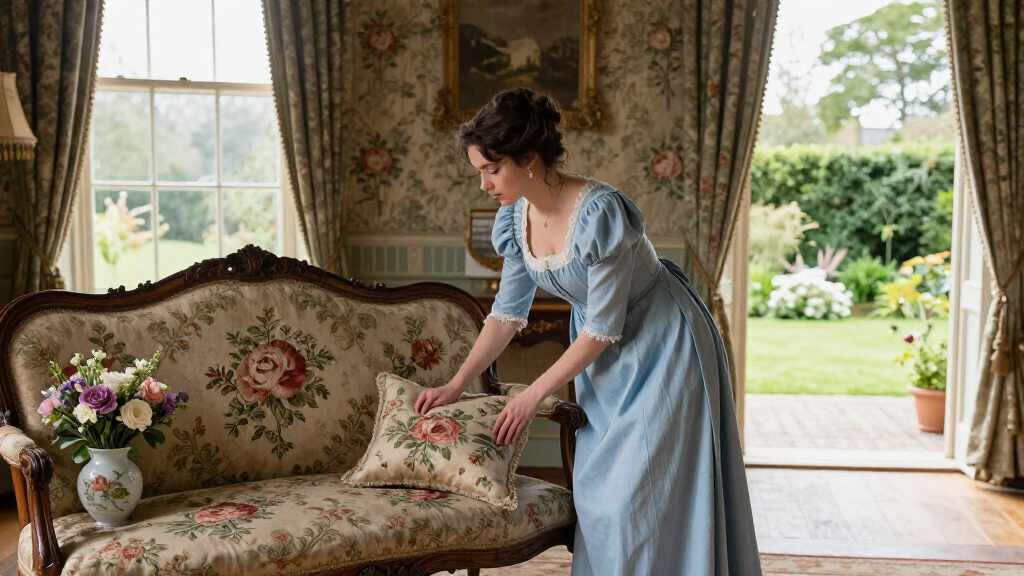
The 2026 Sense & Sensibility adaptation, starring Daisy Edgar-Jones, uses a real Dorset house, period antiques and handmade props to build the Dashwood family’s changing world. Production designer Francesca Di Mottola says the design places the story in the late 1790s and makes the move from Norland Park to Barton Cottage visible through the homes and their details.
The 2026 film adaptation of Jane Austen’s Sense & Sensibility, starring Daisy Edgar-Jones, has arrived in theaters with its design built around real locations, period furnishings and handmade details, according to Veranda. Production designer Francesca Di Mottola says the team set the story in the late 1790s and used the Dashwood family’s homes to reflect what they have to leave behind and how they make a new life.
The production used Kingston-Russell House in Dorset, England, as Norland Park, the Dashwood family’s ancestral home. The team wanted to film in actual interiors rather than rely on soundstages, a choice that, Di Mottola said, also allowed actors and cameras to move more naturally between rooms. The property’s gardens and existing architectural details gave the crew a foundation to adapt for the story.
One feature the production chose to preserve was an original 17th-century chinoiserie painting in the dining room. Di Mottola told Veranda that the team initially questioned whether the room could accommodate a dinner scene with 12 people, a large table and the cameras. They made the space work because the original painting was worth keeping in the frame.
Art historian and Spencer House curator Celia de la Hey worked with Di Mottola as set decorator, helping source and create furnishings and objects suited to the period. The team combined antiques from English prop houses and dealers with individual finds, including an 1780 drawing book discovered on eBay. Edgar-Jones studied the book while taking drawing lessons to prepare for her character’s sketches, Di Mottola said.
How the Homes Tell the Story
The design makes the Dashwoods’ displacement tangible rather than treating the houses as interchangeable backdrops. Norland Park is presented as a place layered with years of family life; the sisters’ move to the more modest Barton Cottage consequently carries a visible emotional cost. In the cottage, handmade objects and small changes suggest that the family gradually settles in.
That approach also connects production choices to the film’s interpretation of Austen. Di Mottola described a natural, lived-in visual style, with rooms intended to feel used and familiar. For viewers, the furnishings, wear and personal objects provide clues to the characters’ history and circumstances, while the use of a real house gives the scenes a continuous physical setting.
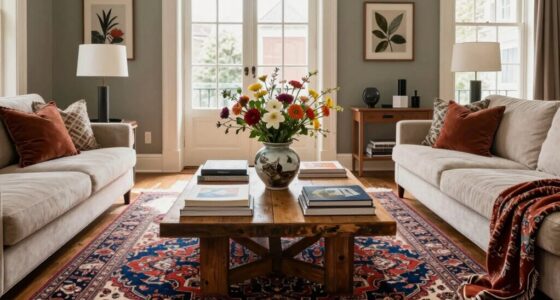
period antique furniture for Georgian style
As an affiliate, we earn on qualifying purchases.
As an affiliate, we earn on qualifying purchases.
A Late Georgian Design Date
The production placed the story in the late 1790s, around the period when Austen is thought to have written the novel, rather than the 1811 publication date. Di Mottola said this distinction informed the film’s interiors, architecture and costumes, anchoring the look in the Georgian era instead of the more ornate styles associated with the early Regency period.
The design team also altered rooms within Kingston-Russell House for the film, including turning one into Norland Park’s library. Furniture was reupholstered and aged; curtains were sun-bleached and frayed to suggest time and use. The goal was not simply to show period objects, but to make them appear to have belonged to the family for years.
““We ended up making it work because it was so worth it to have this type of original work on the walls.””
— Francesca Di Mottola, production designer, speaking to Veranda
As an affiliate, we earn on qualifying purchases.
What the Design Report Leaves Open
Veranda’s report focuses on the production design and does not provide a full inventory of the film’s locations, props or historical sources. It also does not establish how every interior or costume compares with surviving evidence from the period. Di Mottola’s comments describe the production team’s intentions and process, not an independent assessment of historical accuracy.
The report does not give box-office figures or audience response, and it does not specify how widely the production used locations beyond Kingston-Russell House. Those details remain outside the available account.
As an affiliate, we earn on qualifying purchases.
The Film’s Theatrical Run
The adaptation is now in theaters. The design details reported by Veranda offer viewers specific elements to watch for: the original dining-room mural, the aged Georgian furniture, the handmade nursery toys and the objects that travel with the Dashwoods to Barton Cottage. The source does not report a later release date or further production announcements.
Jane Austen inspired interior decor
As an affiliate, we earn on qualifying purchases.
As an affiliate, we earn on qualifying purchases.
Key Questions
Who stars in the 2026 Sense & Sensibility adaptation?
Daisy Edgar-Jones stars in the adaptation, which has reached theaters.
Where was Norland Park filmed?
The production used Kingston-Russell House in Dorset, England, as Norland Park, the Dashwood family’s ancestral home.
When is the film’s story set?
The production placed the story in the late 1790s, rather than the novel’s 1811 publication year, to reflect the Georgian era.
What handmade details appear in the film?
The team made toys for the nursery, including a miniature dollhouse version of Norland Park, and created paper sculptures and painted pebbles for Barton Cottage.
Did the production use original antiques?
According to production designer Francesca Di Mottola, the team worked with original Georgian furniture and antiques, then reupholstered or aged some pieces for filming. The dining room also retained an original 17th-century chinoiserie painting.
Source: rss
Halloween Picks
halloween
As an affiliate, we earn on qualifying purchases.