Choose and style luxury decorative vases to create a polished focal point that suits your room, furnishings, and budget. This guide is for beginners furnishing a home or refreshing an existing display. Allow 45-90 minutes to measure the space, compare vase options, arrange the display, and check the result.

Get furniture and decor delivered free with Prime
- Fast, free delivery on millions of items
- Prime Video, Amazon Music and more included
- Member-only deals all year

12 Inch Silver Ceramic Flower Vase with Rhinestone Accents
- ✔ Material: Ceramic
- ✔ Finish: Polished silver
- ✔ Embellishment: Beads and rhinestones

Hand Painted Gold Vase 11" Tall
- ✔ Material: Glass
- ✔ Finish: Glossy, hand-painted gold
- ✔ Height: 11 in
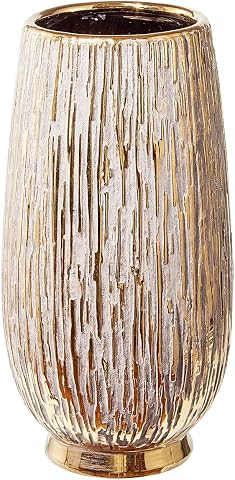
Elegant Rustic Ceramic Vase – Brushed Golden Accents
- ✔ Material: Ceramic
- ✔ Finish: Brushed golden accents with wood-grain hues
- ✔ Shape: Straight tube
Difficulty: Beginner | Time: 45-90 minutes
What You’ll Need
Tools & Materials:
- Tape measure
- Phone or camera for room photos
- Soft cloth
- Felt pads or non-slip display pads
- Waterproof liner or vase insert if using fresh flowers
Knowledge:
- Basic ability to measure a surface and compare colors, shapes, and proportions
Set a budget before shopping. Check the vase’s dimensions, weight, material, and care instructions, especially if placing it on a narrow shelf, near children or pets, or where it could be bumped. A luxury label or high price does not guarantee that a vase suits your space.
12 Inch Silver Ceramic Flower Vase with Rhinestone Accents
The silver ceramic vase makes the clearest case for a luxury centerpiece: its polished finish and hand-applied rhinestone accents catch attention without relying on a bright gold color. At 12 inches tall, it has more tabletop presence than the 11-inch gold glass option and the 9.8-inch rustic ceramic vase, while remaining sized for a console, mantel, or dining table rather than the floor.Practicality helps it take the top spot. The listing says it holds water, so it can move between fresh flowers, dried stems, and artificial arrangements. That gives it a broader role than an ornament chosen only for its surface. The tradeoff is visual: rhinestones and polished silver are deliberately glamorous, so this vase may feel too decorative in a calm, minimalist room. Ceramic construction also means the embellished surface deserves thoughtful placement to avoid knocks or scratches. Choose it when you want one piece to anchor a special space; pick the rustic vase for a softer presence or the gold glass vase for warmer, more reflective color.
Pros:
- Polished silver finish creates a bright focal point.
- Hand-applied rhinestones add distinctive decorative detail.
- The listing says it holds water for fresh flowers.
- At 12 inches tall, it has the greatest height of these three picks.
Cons:
- Rhinestones and polished silver can look busy in restrained interiors.
- The embellished ceramic surface may need careful handling.
- The listing does not specify the opening diameter.
Best for: Shoppers seeking a glamorous, water-holding centerpiece for a dining table, console, or mantel.
Not ideal for: Anyone looking for understated décor, a neutral natural finish, or an unembellished silhouette.
Bottom line: Choose this silver ceramic vase for the strongest blend of statement-making finish, tabletop scale, and stated fresh-flower use.
“Choose this silver ceramic vase for the strongest blend of statement-making finish, tabletop scale, and stated fresh-flower use.”
Hand Painted Gold Vase 11" Tall
Where the silver vase uses rhinestones for sparkle, this hand-painted gold glass vase depends on a glossy, uninterrupted color field. That gives it a cleaner, more contemporary decorative effect, especially in rooms with warm metals or a dramatic dining-table scheme. Its 11-inch height sits between the silver vase and the shorter rustic ceramic option, and the listed 6.3-inch top diameter suggests a broad opening for fuller arrangements.The description calls the glass thickened on the sides and bottom, and says it suits fresh, silk, and dried flowers. Those details make it a flexible styling piece, but the listing also notes that hand-blown glass may contain small air bubbles. That handmade variation may appeal to buyers who like visible character, while others may prefer the more uniform appearance of ceramic. Gold is also a stronger color commitment than the rustic vase’s wood-grain hues, and a glossy finish can dominate a subtle room. We rank it second because it offers a distinctive contemporary gold look, while the silver pick combines comparable statement appeal with explicitly stated water-holding use.
Pros:
- Hand-painted glossy gold gives the vase a bold, reflective look.
- Thickened sides and base are described as a sturdier design.
- The 6.3-inch top diameter allows space for fuller arrangements.
- Listed for fresh, silk, and dried flowers.
Cons:
- Gold gloss may overpower quieter room palettes.
- The listing notes that hand-blown glass may contain air bubbles.
- Glass may require more careful placement than the ceramic options.
Best for: Decorators who want a glossy gold accent for contemporary rooms, celebratory tables, or silk and dried arrangements.
Not ideal for: Buyers who prefer subdued earth tones, a uniform surface, or a low-maintenance piece for a high-traffic spot.
Bottom line: Pick this vase when glossy gold and a broad opening matter more than a restrained finish or the silver vase’s stated water-holding detail.
“Pick this vase when glossy gold and a broad opening matter more than a restrained finish or the silver vase’s stated water-holding detail.”
Elegant Rustic Ceramic Vase – Brushed Golden Accents
The rustic ceramic vase is the least flashy option here, and that is its defining advantage. Wood-grain hues and brushed golden accents give it a warmer, more grounded character than the polished silver vase or glossy gold glass one. At 9.8 inches tall, it is also the most compact pick in this roundup, which helps it fit a smaller console, bedside table, or shelf where a taller centerpiece could crowd the view.Its straight-tube shape is described as suitable for fresh and dried arrangements, and the listing identifies it as holding water. Ceramic offers a solid alternative to the glass body of the gold vase, while the brushed finish avoids the sparkle of the silver vase’s rhinestones. The compromise is that this particular rustic look may feel out of place in a sleek, high-contrast interior. The listing gives its width as 5.1 inches, but does not provide much detail about the opening or care instructions, so buyers planning a specific bouquet should check fit before choosing. We place it third for its narrower style range, though it may be the best match when warmth and restraint matter more than maximum visual impact.
Pros:
- Wood-grain hues bring a warm, natural tone to a room.
- Brushed gold detail is subtler than glossy gold or rhinestones.
- Ceramic body offers a non-glass alternative.
- Listed as holding water and suitable for flower arrangements.
Cons:
- At 9.8 inches, it is the shortest option in the comparison.
- Rustic styling may clash with sleek or highly contemporary décor.
- The listing does not give the opening diameter or specific care guidance.
Best for: Buyers furnishing warm, country-inspired, or natural-material interiors who want a compact ceramic vase.
Not ideal for: Shoppers seeking a dramatic centerpiece, a polished modern finish, or a highly embellished luxury look.
Bottom line: Choose this compact ceramic vase when warm, brushed finishes fit your room better than the higher-impact silver and glossy gold alternatives.
“Choose this compact ceramic vase when warm, brushed finishes fit your room better than the higher-impact silver and glossy gold alternatives.”
As an Amazon Associate we earn from qualifying purchases.
Before You Start
Decide whether the vase will hold flowers or serve as a sculptural object. Some decorative pieces have narrow openings, delicate finishes, or interiors that are not suitable for water. Measure the intended location and check its load limit before buying or placing a heavy vase. Keep fragile pieces away from edges, heat, and direct sunlight unless the maker’s care guidance says those conditions are safe.
Step-by-Step Instructions
Step 1: Choose the display location
Pick the table, console, shelf, mantel, or floor area where the vase will sit. Take a photo of the space from the main viewing angle and note nearby colors, materials, and objects. Decide whether the vase should be the focal point or support an existing arrangement.
Tip:A vase on a busy surface can add to visual clutter. Clear the area temporarily so you can judge its shape and scale.
Check: You have one intended location and know what the vase needs to complement or stand out against.
Step 2: Measure the space
Measure the available width, depth, and height. For a shelf, measure the clearance above it and check that the shelf can support the vase’s weight. Leave enough room to lift the vase safely for cleaning.
Tip:Include any stems in the height calculation if you plan to display flowers. Tall branches can hit a ceiling, frame, or light fixture.
Check: You have recorded the usable dimensions and any weight or clearance limits.
Step 3: Set a budget and practical limits
Choose a spending limit that includes delivery, taxes, and any display accessories. Decide which qualities matter most, such as handmade construction, a particular material, a recognizable maker, or a size that fits the location. Check return terms before ordering online.
Tip:Ask whether the piece is handmade, hand-finished, or mass-produced, and request close-up photos of the base, rim, and finish if the listing lacks them.
Check: You know your maximum price and can compare products using the same priorities.
Step 4: Select a suitable size and shape
Compare each candidate’s listed dimensions with your measurements. Choose a silhouette that leaves usable space around it: a broad, low form suits a wide table, while a tall, narrow form often works on a console or floor. Consider whether the opening fits the stems or branches you intend to use.
Tip:Product photos can distort scale. Compare the listed measurements with a familiar object or mark the vase’s outline on paper before purchasing.
Check: The vase fits the location, can be reached for care, and has an opening suited to its intended use.
Step 5: Match the finish to the room
Choose a color, texture, and material that relate to the room’s existing palette. Repeat one or two nearby tones for a coordinated look, or choose a contrasting finish for a clear focal point. Review the vase in natural and evening light when possible, since glossy, metallic, and textured surfaces can appear different under changing light.
Tip:Use a phone photo of the room beside the product image, but treat screen colors as an estimate. Ask for a sample or view the vase in person when exact color matching matters.
Check: The finish either connects clearly to the room or creates a deliberate contrast without competing with several other prominent objects.
Step 6: Check the vase before display
Inspect the delivered vase in good light before removing any packaging. Look for cracks, chips, unstable bases, uneven finishes, or damage around the rim. Keep the packaging until you have checked the item and decided to keep it. Read care instructions before washing or adding water.
Tip:For a handmade piece, small variations may be part of the stated finish. Compare them with the seller’s description and return policy rather than assuming every irregularity is damage.
Check: The vase is stable, intact, and appropriate for its planned use, or you have contacted the seller about a problem before displaying it.
Step 7: Place and balance the arrangement
Set the vase on a stable, level surface. Put felt or non-slip pads underneath if they suit the surface and do not make the vase unstable. Step back and view the arrangement from the room’s main entrance. If using flowers, trim stems gradually and arrange them so the vase remains visible.
Tip:For a group of vases, vary height or shape while repeating a color or material. Leave visible space between pieces so their outlines do not merge.
Check: The vase stands securely, looks proportional to its surroundings, and does not block a walkway, view, or frequently used surface.
Step 8: Care for the vase and its contents
Dust the vase with a soft cloth and follow the maker’s cleaning instructions. Do not put a decorative vase in a dishwasher or fill it with water unless its material and finish are rated for that use. For fresh flowers, use a clean liner when recommended, change the water regularly, and dry the interior before storing the vase.
Tip:Lift the vase with both hands when its size or weight calls for it. Avoid pulling it across a tabletop, which can scratch the surface or damage the base.
Check: The vase is clean, dry where needed, and positioned without marks or residue on the display surface.
Common Mistakes to Avoid
- Buying a vase based only on a product photo. — Check its listed height, width, opening, weight, material, and return policy against the measured location.
- Using a decorative vase for water without checking its suitability. — Read the care guidance and use a waterproof liner if the maker recommends one.
- Placing a heavy or tall vase where it can tip or obstruct movement. — Check the surface’s load limit, place the vase away from edges, and keep walkways clear.
- Adding too many accessories around the vase. — Remove nearby items first, then return only pieces that support the display’s colors or scale.
Troubleshooting
Problem: The vase looks too small or too large in the room.
Solution: Recheck the measured dimensions and view it from the main approach. Move it to a better-scaled surface or exchange it for a size that leaves more balanced space around it.
Problem: The finish clashes with nearby furniture or looks different from the listing.
Solution: View it in both daylight and evening light, then test it beside the room’s main colors. If the mismatch persists, use the seller’s return process or choose a finish that repeats an existing tone.
Problem: The vase rocks or slides on its surface.
Solution: Move it to a level area and check for debris beneath the base. Add suitable non-slip pads only if they keep the vase level; replace the display location if it remains unstable.
Problem: Water leaks or leaves a mark.
Solution: Empty the vase promptly and dry the surface. Stop using it for water, check the care instructions, and use a separate waterproof insert if the vase is intended for decorative use only.
What Success Looks Like
The completed display fits the measured space, relates clearly to the room’s colors and furnishings, and remains stable without blocking normal use of the area. The vase is free of damage, the surface beneath it is protected, and any flowers or branches suit the opening and height. You can identify how to clean the piece and whether it can safely hold water.
Next Steps
Dust the vase during regular room cleaning and check the base and display surface for grit or moisture. Refresh fresh flowers as needed, following the vase’s care guidance. Reassess the arrangement if you move furniture, change the room’s palette, or notice that the display obstructs daily use. Keep care instructions and purchase details with the item in case you need them later.
Frequently Asked Questions
Can I use a luxury decorative vase for fresh flowers?
Only if the maker says it can hold water. Some finishes or porous materials may stain or leak. Use a suitable waterproof liner when recommended, and do not leave standing water in a piece rated for decorative use only.
How do I choose the right vase height?
Measure the location’s available height and include the stems or branches you plan to display. Check that the finished arrangement will not hit a shelf, frame, light, or ceiling, and that the vase remains proportional to the furniture.
How many vases should I group together?
Start with one vase, then add a small number of pieces only if the surface has enough room. Vary their heights or shapes and repeat a color or material to connect them. Step back to check that each outline remains visible.
How should I clean a luxury vase?
Follow the maker’s instructions and use a soft cloth for routine dusting. Avoid abrasive cleaners, soaking, or dishwasher use unless the maker specifically allows them. Dry the vase fully before placing it on a moisture-sensitive surface.