
TL;DR
Apartment Therapy style editor Emma Dangel says she refreshed floating frames with fabric, double-sided tape and sentimental cards in a project she describes as taking about five minutes. The low-cost idea depends on choosing fabric thin enough for the frame to close; her chenille worked, though she says thinner linen or cotton would be ideal.
Apartment Therapy style editor Emma Dangel describes a quick way to refresh floating frames: cut fabric to fit the frame, attach it to the backing with double-sided tape, and arrange cards or photos on top. Dangel says the project took about five minutes and gave her sentimental paper collection a more intentional display, though the timing is her estimate rather than a measured tutorial result.

Get furniture and decor delivered free with Prime
- Fast, free delivery on millions of items
- Prime Video, Amazon Music and more included
- Member-only deals all year
Dangel writes that she had been keeping notes, birthday cards, gift tags, magazines and movie tickets, and had already placed some of her collection in two large floating frames. She liked having the items visible but felt the displays looked cheap and wanted them to read more like finished wall art. Fabric frame DIY ideas she had seen on Pinterest prompted her to try adding a textile backdrop.
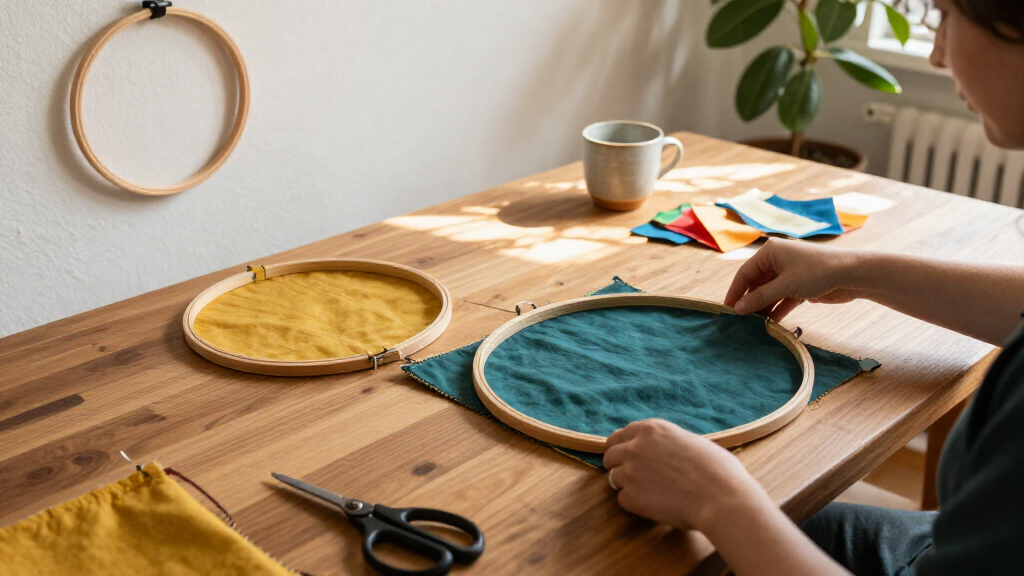
For the project, she used red chenille left over from reupholstering a bedroom vanity bench. She placed one of the frame’s plastic sheets over the fabric, cut around it, and attached the fabric to the backing sheet with double-sided tape. She then positioned cards on the fabric and put the second plastic sheet over them before closing the frame.
Dangel placed the cards in the bottom-right corner, leaving much of the chenille visible. She says she later removed most of the cards but plans to make more fabric frames to display them again. She already owned the fabric and frames, so she says the project cost her nothing; that cost would differ for anyone who needs to buy materials.
A quick frame refresh with fabric and keepsakes
Apartment Therapy style editor Emma Dangel used fabric as a mat for sentimental cards in floating frames. Her account offers a flexible display idea, with fit depending on the fabric and frame.
How she made it
The fabric creates a colorful backdrop for paper keepsakes inside an existing frame.
Trace around one plastic sheet from the floating frame.
Use double-sided tape to secure the fabric to the frame backing.
Place cards or photos on the fabric, add the second sheet, and close the frame.
Choose fabric that fits
The frame must still close securely with the fabric and keepsakes inside.
- Red chenille worked in her frame.
- She already owned the fabric and frames.
- Thinner linen or cotton would be ideal.
- Thick fabric may stop the backing from securing.
Style the display
A textile backdrop can make small mementos feel more intentional and connect the display to a room’s decor.
Make paper visible
Cards, gift tags, notes, and tickets can become part of the wall display.
Repeat a color or texture
Dangel chose chenille that echoed fabric elsewhere in her bedroom.
A Simple Update for Sentimental Displays
The idea offers a way to turn a collection of keepsakes into visible home decor without replacing the frames or mounting each item separately. A fabric backing can add color and texture, while giving cards and photographs a more deliberate setting than a loose collage. Dangel’s choice to match the red textile with a reupholstered bench also shows how a repeated material can connect a display to other furnishings in a room.
The method may appeal to renters or anyone working with limited wall space because it uses existing frames and can be changed as the collection or decor changes. The practical limit is fit: the added fabric and keepsakes must still allow the frame to close securely. The article documents one person’s DIY result, not a tested instruction guide or a guarantee that every frame will accommodate the same materials.
Products Worth Considering

Sonos Era 100 SL Compact Microphone-Free Speaker, Black

Bose Lifestyle Ultra Speaker

Ring Battery Doorbell 2K Plus, Indoor Cam 2K, and Window & Door Sensor Bundle
As an affiliate, we earn on qualifying purchases.
From Paper Keepsakes to Wall Art
Dangel frames the project around a storage problem familiar to people who hold onto small mementos: she lives in New York and says her apartment has little spare space for trinkets. Rather than store all her paper ephemera, she had tried displaying it in floating frames. Her dissatisfaction was with the styling, not with having the objects on view.
She chose fabric already used elsewhere in the bedroom, aiming to repeat its red color and texture across the room. Dangel says she hopes to use the remaining chenille for throw pillows and still plans to paint the frame to match the fabric. Those are planned additions, not changes she says she has completed.
“I realized they needed a mat, and, inspired by some of the fabric frame DIYs I’ve seen on Pinterest lately, I got an idea.”
— Emma Dangel, Apartment Therapy style editor
Fit Depends on Fabric and Frame
The article does not identify the frame brand, dimensions, closure mechanism or exact fabric weight, so readers cannot tell from the account alone whether the same materials will fit their frames. Dangel says thinner linen or cotton would have been ideal, while her chenille worked in her setup. The tutorial also gives no measurements or instructions for trimming fabric around clips, edges or other frame hardware.
The five-minute duration is Dangel’s description of her own project, and the zero-cost figure reflects that she already had the materials. There is no independent testing, price comparison or claim that the method is suitable for every type of frame. Readers should check that the backing sits securely and that the displayed paper is not creased or pinched before hanging the frame.
More Frames and a Matching Finish
Dangel says she plans to create additional fabric frames so she can put more of her cards back on display. She also intends to use leftover chenille for bedroom throw pillows and says painting the frame to match the fabric is the remaining step for the display she made. These are her stated plans; the article does not give a schedule for completing them.
For readers trying the approach, the next practical step is to test the fabric against the frame backing before cutting or taping it in place. A thinner textile may make assembly easier, while a color or texture repeated elsewhere in a room can help tie the display to its surroundings. The finished arrangement can then be adjusted to show more of the fabric or keep the keepsakes as the focus.
Key Questions
What materials did Dangel use?
She used red chenille fabric, a floating frame with two plastic sheets, and double-sided tape. She already owned the fabric and frames.
How did she attach the fabric?
Dangel cut fabric around one plastic sheet from the frame and used double-sided tape to secure it to the backing. She arranged the cards on top and placed the second plastic sheet over them.
What kind of fabric works best?
Dangel cautions against fabric that is too thick because it may stop the backing from securing. She says linen or cotton would have been ideal, although chenille worked in her frame.
Did the project cost nothing?
It cost Dangel nothing because she already had the fabric and frames. Anyone who needs to buy those materials may have different costs; the article does not provide prices.
Is the project guaranteed to take five minutes?
No. The five-minute estimate describes Dangel’s own experience, and the article does not report a timed test. Frame design, fabric thickness and the amount of trimming needed could affect assembly time.
Source: apartmenttherapy.com