
TL;DR

Get furniture and decor delivered free with Prime
- Fast, free delivery on millions of items
- Prime Video, Amazon Music and more included
- Member-only deals all year
Livingetc has published four Japanese-inspired tablescaping lessons for autumn hosting: combine individual place settings with shared dishes, choose tableware with each person in mind, match vessels to the food, and swap in seasonal pieces. The article presents these as adaptable design ideas, not as a report of a new study or a formal change in Japanese dining practice.
Livingetc has published four Japanese-inspired tablescaping lessons for making autumn hosting feel more personal and comfortable, focusing on how diners are served and how tableware is chosen. The guide recommends combining individual settings with shared dishes, selecting bowls and chopsticks for the people using them, matching vessels to the meal, and bringing in a few seasonal pieces.
The first suggestion is to mix individual place settings with shared platters. The article describes an individual space set with a flat tray, rice bowl, soup bowl and small plate, while larger dishes sit in the middle for guests to share. It contrasts that arrangement with the more familiar choice between fully plated courses and a meal served entirely family-style.
Its second lesson is to think about who will use each item, rather than aiming for a perfectly matching set. The report says family members may have their own rice bowls and chopsticks, chosen to suit their hand size and preferences. It frames this as a small way to give the table a personal quality; it does not claim that every Japanese household follows the practice.
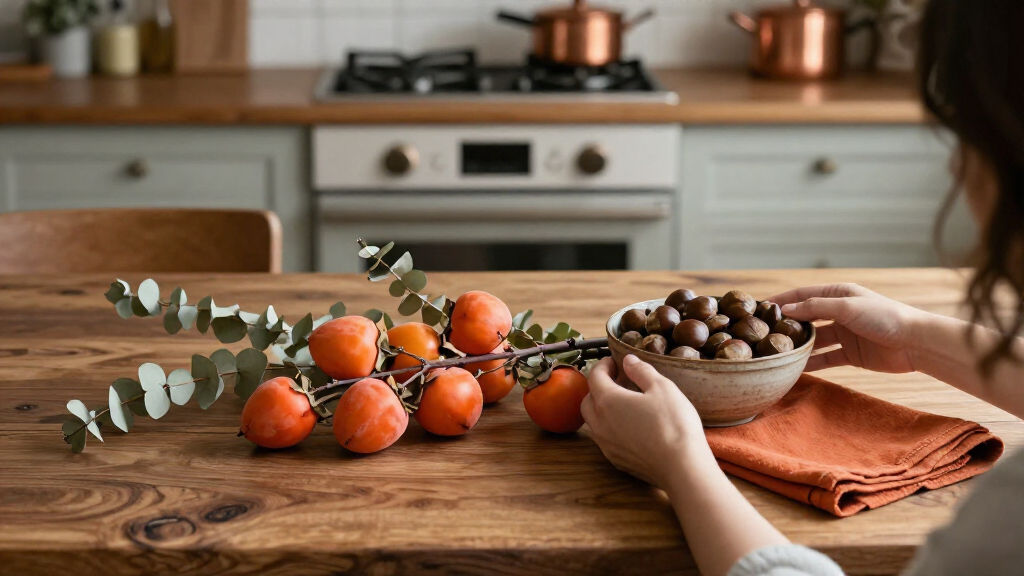
The guide also treats the bowl or plate as part of the meal, pointing to its texture, weight and warmth as well as its appearance. It suggests starting with small plates known as mame-zara, which the article describes as roughly saucer-sized and available in different styles. For autumn, it recommends exchanging summer glass and white porcelain for warm clay and persimmon or rust glazes, with a modest seasonal accent such as a chrysanthemum-shaped chopstick rest.
Small Changes Shape Autumn Hosting
The advice matters to readers planning autumn meals because it offers ways to change the atmosphere of a table without replacing the whole setting. A host can combine pieces they already own, reserve particular bowls for particular people, or add one seasonal object instead of buying a coordinated collection.
The report’s broader point is that hospitality can come through how a meal is arranged and served, not only through decoration. Shared dishes invite guests to take food as the meal progresses, while individual bowls and utensils give each person a defined place. These are design interpretations from the article, rather than measured findings about guest comfort or dining outcomes.
For readers looking for practical inspiration, the approach also connects the table to the menu and time of year. Choosing vessels for the food and changing a few pieces with the season can make an autumn meal feel distinct while leaving the rest of the room and table unchanged.
Products Worth Considering

Philips Hue Festavia Globe Outdoor String Lights, 32 Bulbs, 91 ft

Sonos Era 100 SL Compact Microphone-Free Speaker, White

Bose TV Speaker (2nd Gen) Compact Soundbar with Bluetooth and HDMI
As an affiliate, we earn on qualifying purchases.
The Four Practices in the Guide
Livingetc’s report credits its tablescaping ideas to habits it observed in Japanese home settings and says it developed them while working with Nakagawa, a craft maker and retailer founded in Nara in 1716. The supplied article does not identify a specific home, interview subject or research method behind the observations, so its recommendations are best understood as editorial design guidance.
One idea in the report is that Japanese-style tables can combine a personal setting, called meimei no ba in the article, with food served from the centre. Another is that a vessel can complement the food, a principle the article associates with potter and restaurateur Kitaōji Rosanjin, who opened a Tokyo restaurant in 1925 and made vessels for its dishes. The report uses these examples to explain its focus on the relationship between food, tableware and the diner.
For seasonal styling, the guide contrasts summer’s glass and white porcelain with autumn’s warmer ceramics. It also describes setting out a small seasonal arrangement, or shitsurai, and suggests anticipating the coming season rather than waiting for it to arrive. The article’s practical translation is deliberately restrained: change the plates or add one small detail, rather than redesigning the full table.
“The vessel is the kimono of the food.”
— Livingetc report
What the Guide Does Not Establish
The source is a design and lifestyle article, not a study or survey. It does not provide evidence about how common these practices are across Japan, whether they vary by region or household, or whether adopting them measurably improves guests’ experience. The examples should not be read as rules followed by all Japanese diners.
The supplied material also gives no publication date, named interviews with household hosts, or details on how the four lessons were selected. It is not clear whether the suggestions were tested with readers or guests. Product names and image credits appear in the source, but they do not establish that any listed item is necessary to follow the ideas.
How Hosts Can Adapt the Ideas
The next step for readers is to try the suggestions with the tableware and food they already have: set out an individual bowl or small plate for each guest, place shared dishes within reach, and choose vessels that suit the meal. A host interested in the seasonal approach can swap in a few warmer-toned pieces or add a single autumn detail rather than changing every item.
Livingetc’s article points readers toward Japanese kitchen storage ideas as a related subject, but the supplied report does not give a publication date or further details for that material. No follow-up study, event or formal update is announced. The article remains a set of practical styling recommendations; how readers apply them, and whether Livingetc will publish additional guidance, is not specified.
Key Questions
What are the four Japanese-inspired tablescaping lessons?
The guide recommends combining individual settings with shared dishes, choosing tableware for the person using it, treating the vessel as part of the food, and changing a few plates or bowls for the season.
Do I need to buy Japanese tableware to use the ideas?
No. The article presents the ideas as adaptable practices. Hosts can use existing bowls, small plates and serving dishes; the source does not say that particular products are required.
What does the guide suggest changing for autumn?
It suggests replacing some summer glass or white porcelain with warm-toned clay or glazed pieces, such as persimmon or rust colors, and adding a small seasonal accent.
Does the article say all Japanese homes set tables this way?
No. It describes practices the report draws from Japanese tablescapes, but does not establish how widely they are used or suggest that every household follows them.
Source: rss