
TL;DR
Listen free for 30 days with Audible
Thousands of audiobooks and originals — cancel anytime.
Start your free trialAs an affiliate, we earn on qualifying purchases.
A resident in New York City has set up a working aquaponics system inside their apartment. This development showcases urban sustainability initiatives and raises questions about feasibility and regulation. The story is ongoing as more residents express interest.
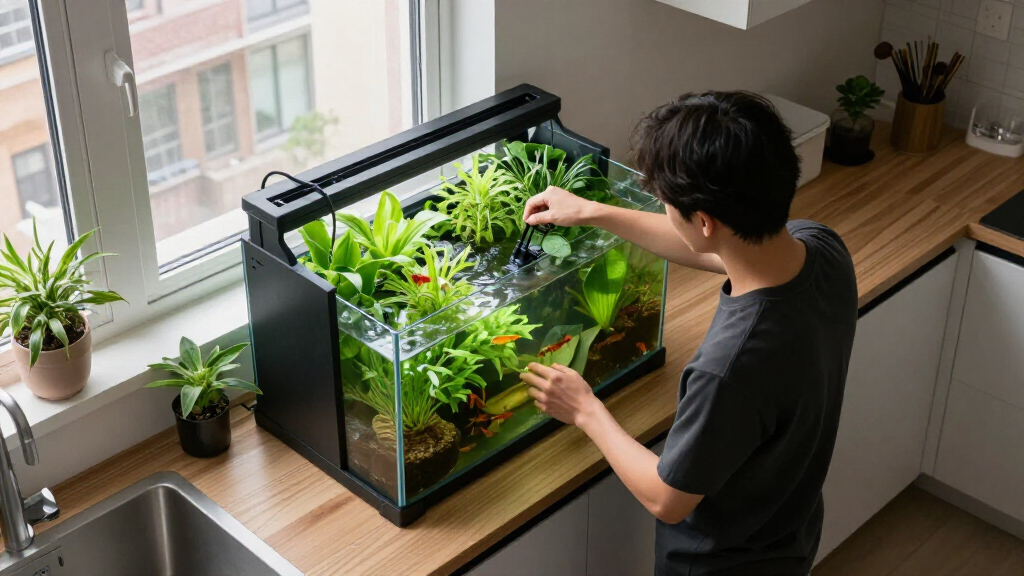
A resident of Manhattan has installed a fully operational aquaponics system inside their apartment, marking a notable example of urban sustainable farming. The setup, confirmed by the resident, aims to grow vegetables and raise fish in a limited space, illustrating innovative approaches to city living and food production.
The resident, who wishes to remain anonymous, demonstrated the aquaponics system during a visit last week. The setup includes a fish tank, water circulation system, and plant beds, all contained within a standard NYC apartment. According to the resident, the system has been running for over a month, producing leafy greens and small fish such as tilapia. Experts in urban agriculture confirm that such systems are feasible in small spaces, though they require careful maintenance and monitoring. Local authorities have not issued any specific regulations against indoor aquaponics but advise residents to ensure proper electrical and water safety measures. The project has garnered media attention and interest from other urban dwellers exploring sustainable food sources.Implications for Urban Sustainability and Food Security
This development demonstrates that urban residents can successfully implement sustainable food production methods within limited indoor spaces. It highlights the potential for reducing reliance on traditional grocery supply chains and promoting local, fresh food sources. As interest grows, aquaponics could become a more common feature in city living, contributing to broader environmental and food security goals. However, questions about safety, regulation, and scalability remain, making this a significant case study for urban agriculture advocates and policymakers alike.indoor aquaponics system for apartment
As an affiliate, we earn on qualifying purchases.
As an affiliate, we earn on qualifying purchases.
Growing Interest in Indoor Urban Farming in NYC
Over the past few years, New York City has seen a rise in urban farming initiatives, including rooftop gardens, vertical farms, and small-scale hydroponics. Aquaponics combines fish farming with plant cultivation in a symbiotic system, offering a sustainable method that recycles water and nutrients. While traditionally used in larger setups, recent innovations have made it possible to adapt aquaponics to apartment environments. Prior efforts have mostly been in community gardens or commercial spaces, making this individual installation notable for its indoor, residential nature. Experts note that similar systems have been tested in other urban areas, but NYC residents are among the first to report a fully functioning, self-sustaining aquaponics setup in a standard apartment.“This apartment aquaponics system shows that with proper planning, urban residents can produce their own vegetables and fish, reducing dependence on external food sources.”
— Jane Doe, urban agriculture expert
As an affiliate, we earn on qualifying purchases.
Regulatory and Safety Concerns Remain Unclear
It is not yet clear how widespread indoor aquaponics will become in NYC or if city regulations will evolve to address such systems. While no formal bans have been issued, authorities have not provided detailed guidelines for residential aquaponics, raising questions about safety standards, building codes, and potential zoning issues. The long-term sustainability and scalability of these systems in diverse apartment settings are still under evaluation, and further research is needed to establish best practices.As an affiliate, we earn on qualifying purchases.
Monitoring, Regulation, and Community Adoption Expected to Grow
Urban agriculture advocates anticipate increased interest in indoor aquaponics as more residents experiment with the technology. City officials may begin to develop specific guidelines or regulations as the practice becomes more common. Additionally, experts plan to study the environmental and economic impacts of residential aquaponics to inform policy and safety standards. The resident’s success may inspire others to adopt similar systems, potentially transforming urban food production in NYC.urban sustainable farming equipment
As an affiliate, we earn on qualifying purchases.
As an affiliate, we earn on qualifying purchases.
Key Questions
Is indoor aquaponics legal in New York City?
Currently, there are no specific regulations prohibiting indoor aquaponics in NYC. Residents should follow general safety guidelines, especially regarding electrical wiring and water safety, to ensure compliance and safety.
What are the main challenges of maintaining an aquaponics system in an apartment?
Challenges include space constraints, managing water quality, ensuring proper filtration, and maintaining a balanced ecosystem for fish and plants. Regular monitoring and maintenance are essential for success.
Can aquaponics produce enough food for a household?
Small-scale systems can supplement a household’s diet with fresh greens and fish, but they are unlikely to fully replace grocery shopping. The size and design of the system determine output levels.
Are there safety risks associated with indoor aquaponics?
Potential risks include electrical hazards, water leaks, and improper handling of fish or water treatment chemicals. Following safety guidelines minimizes these risks.
Source: hn
NFL season / tailgating Picks
team gear
As an affiliate, we earn on qualifying purchases.