To make your outdoor space feel finished, carefully select a variety of planters in different styles, sizes, and materials, and place them thoughtfully around focal points like entryways or seating areas. Incorporate seasonal plants for year-round appeal and add decorative touches such as lanterns or sculptures among your planters. Regular maintenance, like watering and cleaning, keeps everything looking fresh. Keep exploring tips to elevate your outdoor design and create a welcoming, cohesive environment.

Get furniture and decor delivered free with Prime
- Fast, free delivery on millions of items
- Prime Video, Amazon Music and more included
- Member-only deals all year
Key Takeaways
- Select a variety of container styles, materials, and sizes to create visual interest and a layered, polished look.
- Place larger planters at focal points and group smaller pots to define cozy corners and pathways.
- Incorporate seasonal plants to ensure year-round color and vibrancy in the outdoor space.
- Enhance the arrangement with decorative elements like lanterns, sculptures, or string lights for warmth and personality.
- Maintain planters regularly with watering, deadheading, and cleaning to keep the space looking fresh and inviting.

Ever wonder how to transform an outdoor space from bland to inviting? The key lies in choosing the right planters and filling them with thoughtful plantings. Container styles play a big role here. Whether you prefer sleek modern pots, rustic terracotta, or colorful ceramic designs, selecting a variety of container styles adds visual interest and texture. Mixing and matching different shapes, heights, and materials can create a layered, dynamic look that makes your outdoor area feel intentional and polished. Don’t be afraid to experiment with large statement planters paired with smaller, more delicate pots—this contrast draws the eye and makes the space feel curated rather than cluttered.
Mix different container styles and sizes for a layered, polished outdoor look.
Seasonal planting is another essential aspect that keeps your outdoor space fresh and engaging year-round. By changing your plants with the seasons, you guarantee your outdoor area always feels alive and vibrant. In spring, opt for flowering bulbs, tulips, and bright annuals that burst with color. During summer, incorporate lush, leafy greenery and blooming flowers like petunias or marigolds to create a lively atmosphere. Fall planting might include mums, ornamental grasses, and berries, while winter containers can feature evergreens, holly, and decorative branches. The ability to swap out plants according to the season allows you to keep your space dynamic without a complete overhaul. Seasonal planting also encourages biodiversity, which supports local ecosystems and promotes conservation efforts. Incorporating plant diversity can further enhance the health and resilience of your garden.
Placement of planters is equally important. Position larger containers at focal points—near seating areas or entryways—to draw attention and create inviting spots to gather. Use taller planters to add height and depth, guiding the eye through the space. Smaller pots can be grouped together on tables or along pathways, creating cozy corners or borders. Grouping planters with complementary colors or similar plant styles enhances cohesion and makes your outdoor area look thoughtfully designed. Remember to think about sunlight exposure when choosing plants for each container, ensuring they thrive in their new homes.
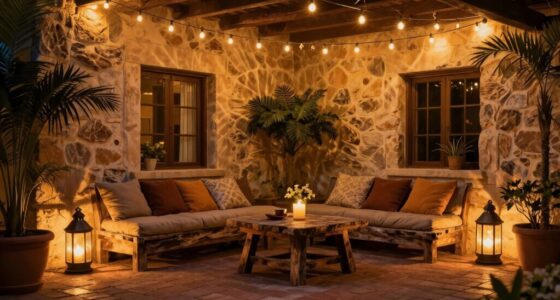
Finally, don’t forget about the finishing touches. Incorporate decorative elements like lanterns, outdoor sculptures, or string lights among your planters to add warmth and personality. Regular maintenance—watering, deadheading, and cleaning—keeps your planters looking their best, reinforcing the finished look. When you thoughtfully select container styles and embrace seasonal planting, your outdoor space becomes an extension of your home—welcoming, lively, and beautifully finished. Paying attention to plant placement and choosing the right containers can truly elevate your outdoor design.
Products Worth Considering

Levoit Core 400S-P Smart Air Purifier for Large Rooms

LEVOIT Vital 200S-P Smart Air Purifier for Large Rooms

Philips Hue Festavia Globe Outdoor String Lights, 32 Bulbs, 91 ft
As an affiliate, we earn on qualifying purchases.
Frequently Asked Questions
What Materials Are Best for Outdoor Planters?
You should choose planter materials like concrete, ceramic, or metal for outdoor use, as they’re durable and weather-resistant. Consider durability concerns, especially if you face harsh weather; for example, plastic planters are lightweight but may crack in extreme cold. Wood can look charming but needs proper sealing to withstand moisture. Selecting the right materials guarantees your planters last and keep your outdoor space looking polished year-round.
How Often Should I Water My Outdoor Plants?
You should water your outdoor plants when the top inch of soil feels dry, typically every 2-3 days during warm weather. Follow a consistent watering schedule to keep plants healthy. Use plant watering tips like watering deeply to encourage strong roots and avoiding overwatering to prevent root rot. Adjust your watering routine based on weather conditions, plant type, and soil moisture for the best results.
Can Planters Be Used on Uneven Surfaces?
Yes, you can use planters on uneven surfaces, but focus on plant stability and surface leveling. Place small stones or bricks under the planter’s base to create a stable, level surface. This prevents tipping and guarantees your plants grow healthily. Using shims or adjustable feet also helps level larger planters. By stabilizing your planters, you’ll enjoy a polished, finished look even on uneven terrain.
How Do I Prevent Pests in Outdoor Planters?
To prevent pests in outdoor planters, choose pest-resistant plants and incorporate natural pest deterrents like neem oil or companion planting. Regularly inspect your planters for signs of pests and remove any affected foliage promptly. Keep your planters clean and avoid overwatering, as damp soil attracts pests. Using organic repellents and selecting plants that naturally ward off insects can help maintain a healthy, pest-free outdoor space.
What Are Some Low-Maintenance Plant Options?
Think of your garden as a well-oiled machine, needing only simple parts to keep running smoothly. Opt for succulent varieties and drought-tolerant plants, like sedum or agave, which thrive on minimal care. These plants require infrequent watering and little fuss, making them perfect for low-maintenance setups. Their hardy nature guarantees your outdoor space stays vibrant and inviting without constant attention, giving you more time to enjoy your beautiful garden.
Conclusion
With a little creativity and careful placement, planters transform your outdoor space into a polished paradise. By balancing bold blooms with lush greenery, you’ll create a cozy, mesmerizing corner that invites relaxation and radiance. Remember, with thoughtful touches and timely tweaks, your outdoor area will always feel fresh and finished. So, seize the space, select stunning succulents, and start shaping a superb, sensational sanctuary that’s perfect for relaxing, reflecting, and reconnecting. Your beautiful backyard awaits!