
TL;DR

Get furniture and decor delivered free with Prime
- Fast, free delivery on millions of items
- Prime Video, Amazon Music and more included
- Member-only deals all year
Designer Fatih Arslan has published a tour of the lamps in his home, describing their designs, history and how he uses them. He says the pieces are expensive but worthwhile to him as a collection, while noting that lower-cost alternatives and secondhand finds are available.
Designer Fatih Arslan published a tour of the lamps in his home on October 5, describing pieces by Artemide, Isamu Noguchi and Louis Poulsen alongside the reasons he collects them. The report offers a personal look at how well-known lighting designs function in a home, while Arslan cautions that their high prices are not necessarily justified for buyers seeking light alone.
Arslan says he began the tour after people who saw his lamp posts on X and Instagram repeatedly asked about the brands and models. He also says he designed a lamp himself. The collection spans task lighting, paper lanterns, pendant lights and a wall lamp, with items from different periods of modern design.
Among the desk lamps are the Artemide Tolomeo Mini, designed by Michele De Lucchi and Giancarlo Fassina in 1987, and the Tizio Micro, a smaller version of Richard Sapper’s 1972 Tizio. Arslan values the Tolomeo for its mobility and use at a work desk. The Tizio’s arms carry electricity without visible wires, and counterweights let its position be adjusted, he writes.
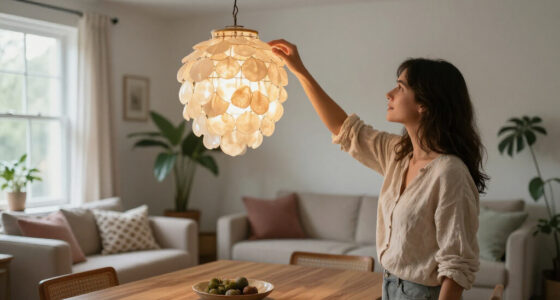
Several lamps in the home belong to Noguchi’s Akari series, made from washi paper. Arslan says his Akari 1A came secondhand from Germany and describes its light as gentle. His collection also includes the taller 3A, the sculptural 16A and a 75A that he says is about 75 centimeters across and the largest lamp in his home. He identifies Ozeki, a family-run workshop in Gifu, Japan, as the maker still producing the Akari lamps by hand.
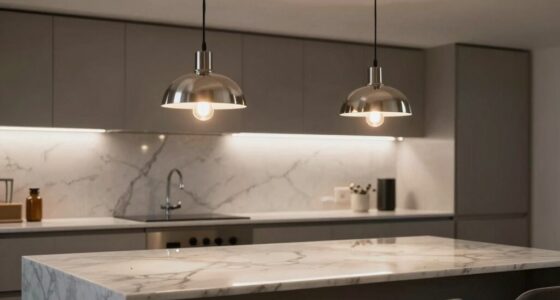
The other named designs include Louis Poulsen’s PH 5 and PH 3/2, both associated with Poul Henningsen’s approach to diffusing light, and the AJ Wall Lamp, designed by Arne Jacobsen for Copenhagen’s SAS Royal Hotel in 1957. Arslan says he likes the AJ’s adjustable head. He also recounts accidentally breaking the glass PH 3/2 and waiting months for a replacement.
Design Icons in Everyday Rooms
Arslan’s account connects celebrated design objects with ordinary decisions about where light is needed: a Tolomeo at a desk, an Akari in a bedroom, or a broad paper lantern filling an office. Those examples show why a lamp can be valued for more than brightness, including its form, materials, history and fit within a room.
The report also makes the cost question explicit. Arslan says these lamps are not cheap and that their prices may not be worth it on practical grounds, even though he personally considers them worth the expense as a collector. That distinction matters to readers comparing an iconic model with a less costly lamp designed to do the same basic job.
His notes also point to different kinds of ownership: some pieces are bought new, some can be found secondhand, and paper models depend on specialist hand production. For readers, the tour is less a price guide than a set of firsthand observations about how particular designs behave and feel in a home.
As an affiliate, we earn on qualifying purchases.
From Desk Lamps to Akari Lanterns
The collection reaches across several decades of design. Henningsen’s three-shade lighting system dates to 1925, according to Arslan, while Noguchi began the Akari series in 1951 after visiting Gifu, a city associated with paper lanterns. Jacobsen designed the AJ lamp for the SAS Royal Hotel in 1957; Henningsen’s PH 5 followed in 1958. The Tolomeo and Tizio came later, in 1987 and 1972 respectively.
Arslan describes design details rather than offering a full buying or technical guide. He says the PH 5 uses a 50-centimeter shade and internal red and blue components, and that the PH 3/2 combines mouth-blown glass with a shiny exterior and matte interior. For the Akari lamps, washi paper gives the light a soft appearance. These are his descriptions of the models and his experience with them, not independent product testing.
He says there are more affordable options: well-designed lamps from IKEA may cost around a tenth of the designer pieces, and vintage shops or fairs can offer the named designs at lower prices. The report does not provide specific current prices or a comparison of particular models.
“Are they worth it? Probably not for their price, but for me they are worth every penny.”
— Fatih Arslan
As an affiliate, we earn on qualifying purchases.
Prices and Buying Details Are Missing
The article does not list purchase prices, retailer information, or the condition and age of each lamp. It also does not compare the designer models with specific lower-cost alternatives, so its estimate that some IKEA designs cost about a tenth as much is Arslan’s general observation rather than a detailed price comparison.
Several statements about production, awards and design history are presented in the personal report; the source does not include separate interviews with the designers, manufacturers or historians. The account is not a review of electrical performance, durability or energy use. Readers considering a purchase would need to check current availability, authenticity, dimensions and suitability for their own space.
As an affiliate, we earn on qualifying purchases.
A Tour, Not a Buying Guide
Arslan’s article presents the lamps in no particular order and focuses on his own experience with them. It does not announce a new product, exhibition or follow-up project, and the source gives no schedule for additional coverage.
For readers interested in a particular model, the next practical step is to verify current specifications and prices with a seller or manufacturer, and to look at reputable vintage dealers or fairs if seeking a secondhand piece. The report’s main takeaway remains personal: Arslan collects these lamps for their design and presence, while acknowledging that a less expensive option may make more sense when the main need is illumination.
As an affiliate, we earn on qualifying purchases.
Key Questions
Who published the lamp tour?
Fatih Arslan published the personal tour on October 5, 2026, after readers asked about lamps he had shared on social media.
Which lamps does the article discuss?
It names an Artemide Tolomeo Mini, a Tizio Micro, four Akari models, the Louis Poulsen PH 5 and PH 3/2, and an AJ Wall Lamp.
Does Arslan say the lamps are worth their prices?
He says they are probably not worth their prices on practical grounds, but are worth it to him as a collector. He also points to lower-cost designs and vintage finds as alternatives.
What is distinctive about the Akari lamps?
Arslan describes them as washi-paper lamps designed by Isamu Noguchi, with forms that soften the light. He says they continue to be made by hand at Ozeki in Gifu, Japan.
Source: hn
Fall Picks
fall essentials
As an affiliate, we earn on qualifying purchases.