
TL;DR

Get furniture and decor delivered free with Prime
- Fast, free delivery on millions of items
- Prime Video, Amazon Music and more included
- Member-only deals all year
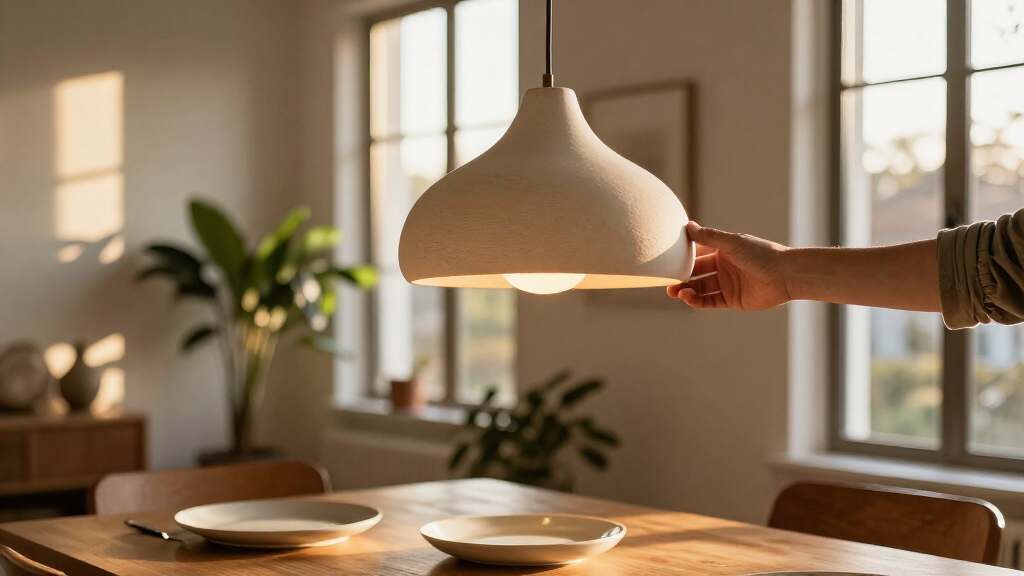
PINCH designer Russell Pinch says the Anders Light began in 2009 as a pendant made for a studio photo shoot, not for sale. Developing its draped banana-fiber shade took five years; the handmade design later became one of the studio’s most requested pieces and has expanded to include a wall-light version.
PINCH’s Anders Light, now one of the London design studio’s most requested pieces, began in 2009 as a lamp for a photo shoot and took five years to perfect, designer Russell Pinch told Livingetc. Its layered, draped shade is made from banana fiber, a material the studio says diffuses light into the pendant’s soft, varied glow.
Russell Pinch designed the lamp while PINCH was preparing images of its early furniture collection. The studio, founded in 2004, needed a light to hang over a table in the shoot. Pinch told Livingetc that an image of a Lanvin dress caught in motion gave him the idea: a lifted outer layer revealing the folds beneath. He made an initial model from fabric, but said he did not initially intend it to become a product.
Finding a way to build the form proved difficult. Pinch said manufacturers suggested making the shade in plastic, but he wanted a material that would preserve the loose drape of clothing. A creative director at Jasper Conran, where he was then freelancing, advised him to seek a milliner rather than a tailor. The eventual use of banana fiber, he said, produced a translucency that enhanced the design by diffusing light through its layers.
Making the shade remains labor-intensive. According to Livingetc, individual layers are cut, stiffened, sewn and pinned before being shaped. Pinch said the angles of the drapes are checked for quality, even though the finished arrangement can look spontaneous. He told the magazine that the studio kept the lamp in its collection during a long period of modest sales, before it gradually gained customers and became one of PINCH’s most requested designs.
How Handmade Layers Shape the Light
The Anders story offers a concrete example of how a product’s appearance can conceal the work behind it. Its shade may look like casually arranged fabric, but PINCH describes a controlled process in which each layer is formed and checked. That distinction matters to people considering the pendant: its sculptural quality and soft illumination depend on both the material and the making, rather than on a simple mass-produced shell.
The lamp’s path from a one-off photo prop to a requested product also shows that its popularity developed over time, rather than arriving immediately at launch. Livingetc reports that the design now appears in homes and commercial projects, including a Texas yoga studio. The publication also cites interior designer Lonika Chande, who praised the warm atmosphere created by the plant-fiber shade. These examples indicate the range of settings in which it is being used, but do not establish sales figures or broader market demand.
For PINCH, the piece is also an expression of a design aim Russell Pinch described as making work that is “undateable.” The Anders has remained in the collection while being adapted into a wall-light version. Its continued production connects a distinctive, labor-intensive form with a practical lighting function, while leaving questions about price, production volume and material sourcing unanswered in the available report.
As an affiliate, we earn on qualifying purchases.
From Photo Prop to PINCH Collection
PINCH was founded in 2004, and the Anders emerged five years later while the studio was photographing early designs including the Avery chair, Harper table and Moreau sofa. Its original purpose was to complete a room for the shoot. The move from model to manufactured light required a different kind of expertise: Pinch recalled being told that the construction called for millinery skills, a clue to the importance of shaping and layering the shade.
Even after the studio developed a version it could make, the lamp did not become an immediate commercial success. Pinch told Livingetc that sales were sufficient to justify keeping it, but only just. The design stayed in the collection partly because the studio continued to use it in its own photography. Over time, the audience grew, and PINCH added a wall-light version. The report does not provide dates for that expansion or detailed specifications for the different models.
““I wanted it to have the drape of a dress. Anything less would have looked a bit soulless.””
— Russell Pinch, PINCH designer, speaking to Livingetc
As an affiliate, we earn on qualifying purchases.
Details Behind the Current Range
Livingetc’s report does not give the Anders Light’s price, production volume, dimensions, technical lighting specifications or the number of people involved in making each shade. It also does not identify where the banana fiber is sourced or provide information about its environmental impacts. The account explains the material’s role in diffusing light, but offers no independent testing or measurements of brightness.
The report says the design took five years to perfect, but does not set out a dated development timeline or specify precisely when commercial production began. It describes the lamp as one of PINCH’s most requested pieces without providing sales data or a comparison with other products. Those details should not be inferred from its visibility in interiors or from the examples cited.
As an affiliate, we earn on qualifying purchases.
The Pendant’s Wall-Light Form
The clearest development identified in the report is the Anders’ expansion beyond the pendant into a wall-light version. PINCH’s design is described as continuing to evolve, but Livingetc provides no announced release schedule, future product plans or information about changes to materials and construction. Further details about the current range, availability and specifications would need to come from the studio or its retailers.
For now, the Anders remains a handmade design whose defining features, according to its designer, are its layered shade and the way it softens light. Whether PINCH will introduce additional formats or publish further production details is not stated in the report.
As an affiliate, we earn on qualifying purchases.
Key Questions
Who designed the PINCH Anders Light?
Russell Pinch designed the lamp for PINCH, the London studio he co-founded. He described its development to Livingetc.
Why was the Anders Light created?
It began as a lamp needed for a PINCH photo shoot in 2009, rather than as a product the studio originally planned to sell.
What is the Anders shade made from?
The shade uses banana fiber. Pinch said its translucency diffuses light through the layered form. The Livingetc report does not give sourcing or environmental details.
How long did it take to perfect the design?
Pinch’s account, as reported by Livingetc, says the Anders took five years to perfect. The report does not provide a detailed development timeline.
Is the Anders available in a wall-light version?
Livingetc reports that PINCH has a wall-light version of the Anders. The article does not specify its price, dimensions or availability by market.
Source: rss
Halloween Picks
halloween
As an affiliate, we earn on qualifying purchases.