TL;DR

Get furniture and decor delivered free with Prime
- Fast, free delivery on millions of items
- Prime Video, Amazon Music and more included
- Member-only deals all year
A Livingetc report presents Norwegian designer Gudbjørg Simonsen’s approach to lighting homes during long, dark winters. Her advice includes using varied light and layering practical and decorative sources, while treating seasonal darkness as part of a room’s atmosphere rather than trying to eliminate it.
Norwegian designer Gudbjørg Simonsen says homes should be designed for changing daylight across the year, not lit as if conditions stay constant. In advice published by Livingetc, she recommends varied, layered lighting that supports practical activities while creating warmth and atmosphere during dark winter evenings.
Simonsen, who is based in Stavanger, Norway, told Livingetc that her work takes account of both the local climate and the people who live in each home. She said a lighting scheme should respond to seasonal shifts in daylight, as well as to how residents use a space. Rather than treating darkness as a problem to be overcome, she argues for designing with it.
One part of that approach is to avoid making every corner equally bright. Simonsen says she prefers variation, with brighter areas, softer transitions and shadows. She compares this with natural light, which is not uniformly distributed, and says a completely even wash can make a room feel flat.
She also describes lighting as both functional and emotional. Task lighting can illuminate a work surface or help people move through a room, while accent lighting can highlight artwork or contribute to a sense of welcome. The report recommends layering different light sources, including discreet practical fittings and decorative accents, rather than relying on a single general light. The supplied source ends partway through Simonsen’s discussion of technical lighting, so it does not provide her full account of fixture choices or placement.
Lighting Beyond Winter Brightness
The advice frames winter lighting as more than a matter of visibility. Simonsen says warm light can shape how a home feels and can create a sense of human presence. She describes the sight of a warmly lit window on a dark evening as a signal that someone is home. That interpretation is her design perspective, not a claim that a particular lighting scheme has a proven effect on mood.
For readers planning a room, the practical point is to match different lights to different uses. A work surface may need focused illumination, while a seating area may benefit from softer light and shadow. This approach offers an alternative to installing brighter overhead lighting everywhere, while still recognizing that rooms need enough light for their daily tasks.
As an affiliate, we earn on qualifying purchases.
Norway’s Seasonal Daylight
The Livingetc report uses Norway’s winter daylight as the setting for Simonsen’s advice. It says parts of the country receive a maximum of about six hours of daylight per day in December, while the far north can have periods with no daylight. Those figures are presented as broad seasonal context; the article does not specify locations, dates or a data source for them.
Simonsen links this seasonal change to her wider design practice, which draws on the surrounding environment and traditional Norwegian architecture. She says a home’s character can change through the year as light, shadow and materials are experienced differently. The report offers her professional perspective rather than a technical lighting standard or a controlled study.
“I don’t think we can design homes as though light remains constant throughout the year. Nor do I think the answer is to fight the darkness.”
— Gudbjørg Simonsen, Norwegian designer, speaking to Livingetc
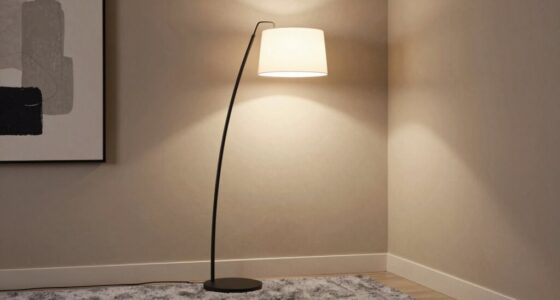
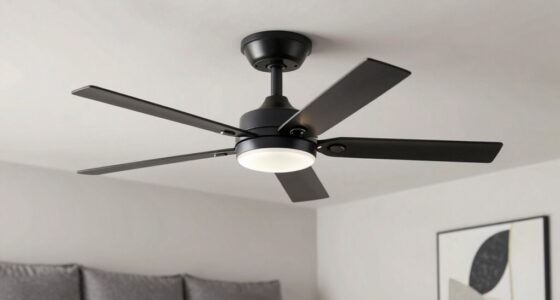
Norwegian style ambient lighting fixtures
As an affiliate, we earn on qualifying purchases.
As an affiliate, we earn on qualifying purchases.
Limits of the Published Advice
The supplied Livingetc material does not give a complete lighting plan, product list, brightness levels, bulb specifications or room-by-room instructions. It also does not include research testing whether the suggested choices improve mood or wellbeing. Simonsen’s comments are attributed design advice, not clinical guidance.
The source excerpt cuts off during its section on layered lighting, after introducing functional or technical lighting. It is not clear from the material provided what further recommendations the full article makes about decorative lighting, placement or specific fixtures. The daylight figures are also not accompanied by a named dataset or location-by-location breakdown.
As an affiliate, we earn on qualifying purchases.
Applying the Ideas at Home
The report does not announce a product launch, policy change or later milestone. For readers, the next step is to consider how each room is used: identify where focused task light is needed, where softer accent light could add atmosphere, and whether some shadows can remain rather than filling the whole space with uniform brightness. Simonsen’s approach calls for balancing practical visibility with the character of a room.
Any specific lighting choices will depend on the home, its occupants and its existing fittings. The supplied source provides general design principles, but further details about recommended equipment or measurable lighting levels are not available in the excerpt.
As an affiliate, we earn on qualifying purchases.
Key Questions
What is Gudbjørg Simonsen’s main advice for winter lighting?
She recommends designing for seasonal changes and combining practical light with atmosphere, rather than trying to make every area uniformly bright.
What does layered lighting mean in this report?
It means using different light sources for different purposes, such as focused light for a work surface and accent lighting for artwork or atmosphere. The supplied excerpt does not give a complete fixture plan.
Does Simonsen recommend eliminating dark corners?
No. She says she values variation, including brighter areas, softer transitions and shadow, instead of an even wash of light throughout a room.
What does the report say about Norwegian winter daylight?
It says some parts of Norway receive a maximum of about six hours of daylight per day in December, while the far north can have periods with no daylight. The excerpt does not cite a data source or give a location-specific breakdown.
Source: rss
Halloween Picks
halloween
As an affiliate, we earn on qualifying purchases.