TL;DR
A kitchen renovation featured in Season 9 of Home Town uses four-by-four-inch olive-green tiles instead of rectangular subway tile. The glossy, handcrafted-looking tiles and white grout create a moody backsplash; the exact product is identified as ICTC’s Tile in Seville Green.
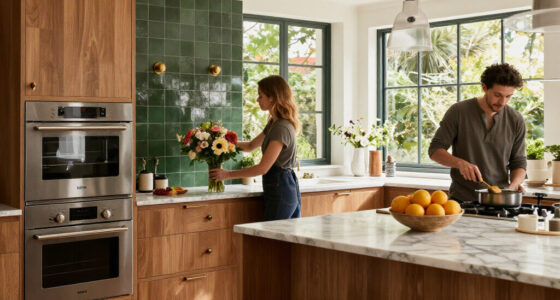
A Season 9 Home Town kitchen renovation featuring Erin Napier uses four-by-four-inch olive-green tiles in place of rectangular subway tile, offering a colorful backsplash option for a small cabin kitchen. In its account of the renovation, Hunker describes the tiles as arranged in a grid with white grout and extending up the wall, alongside muted green and khaki finishes that give the room a darker, tonal look.

Get furniture and decor delivered free with Prime
- Fast, free delivery on millions of items
- Prime Video, Amazon Music and more included
- Member-only deals all year
According to Hunker’s description of the cabin kitchen, the design uses a palette of khaki walls and green-gray cabinetry, with dark countertops adding to the subdued finish. Rather than using white subway tile, the renovation features a more saturated olive shade for the backsplash. The square format keeps the layout straightforward, while the stronger color gives it a visual focal point.
Hunker describes the tiles as having an artisanal finish that resembles zellige, with slightly uneven glazed surfaces that reflect light differently across the wall. The article identifies the specific tile as ICTC’s Tile in Seville Green. It says the backsplash reaches all the way up the wall but does not provide dimensions or project costs.
For readers considering a similar look, Hunker points to other ways to add color without changing the tile shape. The article says Napier previously used terracotta-colored grout with white tile in Season 4, Episode 13 of Home Town. It also names Smart Tiles’ Zellige Taza Green Glossy Wall Tile as a peel-and-stick alternative, describing it as a more renter-friendly option with a variegated, handcrafted appearance.
A colorful kitchen alternative to subway tile
Erin Napier’s Season 9 Home Town renovation pairs olive-green square tile with white grout for a moody cabin backsplash. The look shows how color and finish can make a familiar tile shape stand out.
Why the backsplash stands out
The square grid keeps the layout straightforward while the saturated glaze creates a focal point.
Olive green
ICTC’s Tile in Seville Green adds a concentrated color note to the small cabin kitchen.
Handcrafted look
Slightly uneven glazed surfaces resemble zellige and reflect light across the wall.
Tonal surroundings
Khaki walls, green-gray cabinetry and dark counters support the moody palette.
Ways to bring in color
The article describes alternatives for changing the look without choosing this exact tile.
- Olive-green squares with white grout
- Grid layout extending up the wall
- Color coordinated with the room’s finishes
- Terracotta grout with white tile
- Smart Tiles’ Zellige Taza Green Glossy Wall Tile
- Burgundy, plum or navy for added drama
Before choosing a product
The renovation account leaves practical details open, so compare the options against your own kitchen.
- Check how the tile color works with existing cabinets, walls and counters.
- Ask for samples if available before settling on a shade.
- For peel-and-stick tile, review wall preparation, moisture exposure and removal guidance.
- Price, dimensions, availability and long-term performance are not provided.
A Color Shift From Subway Tile
The kitchen, as described by Hunker, is an example of how a backsplash can stand out through color, finish and grout without relying on an elaborate pattern. Square tile remains a familiar shape, but the saturated olive glaze distinguishes it from the common rectangular subway format. That makes the renovation relevant to homeowners looking for a noticeable change without a complicated tile layout.
The palette also shows why tile color cannot be considered in isolation. In this cabin, olive green sits alongside muted green-gray cabinetry, khaki walls and dark counters, producing a moody, coordinated effect. The same shade could read differently in a brighter room or beside lighter finishes. The example is inspiration, not a guarantee that the look will suit every kitchen.
Hunker presents the peel-and-stick suggestion as a lower-commitment alternative, but does not establish that the product performs like installed ceramic tile or is suitable for every wall. Readers should check the product’s instructions and compatibility with their surface before buying.
Products Worth Considering

Bose Lifestyle Ultra Wireless Home Speaker, White Smoke

Hisense 85U6SF Pro 85-Inch U6 Pro Mini-LED 4K UHD Smart Fire TV

Roborock Qrevo S Pro Robot Vacuum and Mop with 18,500 Pa Suction
As an affiliate, we earn on qualifying purchases.
The Cabin Kitchen’s Design
Hunker identifies the renovation’s setting as a small cabin, where the design uses the compact scale to create a cozy atmosphere rather than treating the kitchen as a blank, bright space. The wall and cabinet colors remain relatively muted, while the backsplash supplies a more concentrated olive tone. Its grid pattern gives the wall structure without introducing a complex arrangement.
The example is part of Home Town, where Napier and her team renovate homes. Hunker identifies the kitchen as appearing in Season 9, but does not give the episode number or its broadcast date. The article says the earlier grout example is from Season 4, Episode 13, where terracotta grout was used with white tiles to echo a brick accent wall.
Hunker also mentions burgundy, plum and navy as possible ways to add drama. These are suggestions, not colors used in the cabin project. The specific design shown centers on olive-green tile, white grout and the surrounding green and khaki finishes.
Product and Installation Details
Hunker’s account does not give the tile price, backsplash dimensions, installation method or the cabin’s location. It also does not say whether the tile is still available, whether its color varies between batches or what maintenance the glaze requires. The article supplies the product name but includes no direct statement from Napier about the design or her reasons for choosing it.
Hunker presents the peel-and-stick product as a cheaper, renter-friendly possibility, but provides no price comparison, durability information or removal guidance. Its suitability will depend on the wall surface and the product’s installation requirements. The renovation image also cannot establish how the tile appears under different lighting or how it holds up over time.
Check the Tile Before Buying
Readers interested in recreating the look can compare the named Seville Green tile with the room’s existing finishes and request samples if available before settling on a color. Hunker’s description emphasizes the relationship between olive tile, white grout, green-gray cabinetry and dark counters, so evaluating those materials together may give a more useful preview than choosing tile from a product image alone.
Those considering the peel-and-stick option should review the manufacturer’s guidance on wall preparation, moisture exposure and removal before installation, particularly in a kitchen. Hunker provides no follow-up project details or later updates, so availability, cost and long-term performance remain questions for product listings and installation guidance rather than facts established by its renovation account.
Source: Hunker
Key Questions
What backsplash tile does Erin Napier use in the cabin kitchen?
Hunker identifies it as ICTC’s Tile in Seville Green, a four-by-four-inch square tile with an olive-green glaze.
How is the tile arranged?
According to Hunker, the tiles are laid in a grid formation with white grout and extend up the wall. The article does not give the backsplash’s dimensions.
What gives the backsplash its handcrafted appearance?
Hunker describes the tile’s glazed surface as slightly uneven, resembling zellige and reflecting light across the backsplash.
Is there a peel-and-stick alternative?
Hunker names Smart Tiles’ Zellige Taza Green Glossy Wall Tile as an option with a variegated, handcrafted look. The article does not specify its price, durability or suitability for a particular kitchen.
Source: hunker.com