TL;DR
An Hunker article describes ways to reuse empty whiskey bottles as dispensers for soap and other liquids by adding a compatible pump. The project can involve keeping or removing labels, painting the bottle, and choosing a screw-on or stopper-style pump; safe placement matters because glass can break.
Empty whiskey bottles can be repurposed as dispensers for hand soap, dish soap and other liquids by fitting them with a pump, according to an Hunker article. The idea offers a way to reuse glass containers and replace disposable-looking plastic bottles, although the fit, bottle placement and label finish require attention.

Get furniture and decor delivered free with Prime
- Fast, free delivery on millions of items
- Prime Video, Amazon Music and more included
- Member-only deals all year
The first approach is to keep the bottle’s original label for a rustic or playful look. Because paper labels can be damaged by water and soap, the article recommends sealing them with several coats of Mod Podge, letting each coat dry before applying the next. Masking tape around the label can help keep the coating off the surrounding glass. The article lists 2-ounce Mod Podge bottles at Dollar Tree for $1.25, but prices and availability can change.
A second option is to remove the label with steel wool or an adhesive remover such as Goo Gone, then use the bottle’s bare glass as the dispenser’s main feature. A third is to paint the glass; the article describes a YouTube project by Our Upcycled Life that painted a Crown Royal bottle white and added a vinyl phrase. These finishes can be adapted to the bathroom or kitchen, but paint and decorative coatings should be applied according to their product instructions.
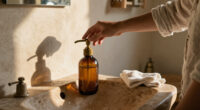
The remaining two approaches focus on the pump and what the bottle holds. For a threaded neck, a compatible screw-on soap pump may fit; for a bottle with a cork-style opening, the article suggests a stopper pump. Before filling, check that the pump is secure and its tube reaches near the bottom. A tube that is too long can be trimmed with scissors, while a short one may need a replacement. Use a funnel to add soap, lotion, conditioner or liquid cleaner. The article cites a two-pack of brushed-nickel pumps at about $12 and a five-pack of cork-stopper pumps at about $10 on Amazon; those listed prices are not guaranteed current prices.
Turn Whiskey Bottles Into Useful Dispensers
Five ways to reuse an empty bottle for soap and other liquids. A good fit and a secure location matter as much as the finish.
Choose a bottle finish
Adapt the look to your bathroom or kitchen, while protecting labels and following coating instructions.
Seal the original label
Apply several coats of Mod Podge, letting each dry. Masking tape can protect nearby glass.
Show bare glass
Use steel wool or an adhesive remover to clear the label and residue.
Add a new finish
Paint the glass and decorate it, following product instructions.
Match the pump to the opening
Bottle necks vary, so check the fit and tube before filling.
- Choose a compatible screw-on pump.
- Check that it seals securely.
- Look for a stopper-style pump.
- Check the fit before adding liquid.
Prepare and fill
Test the pump before adding soap, lotion, conditioner or liquid cleaner.
Wash it thoroughly, taking care not to soak a label you plan to keep.
It should reach near the bottom. Trim an overly long tube or replace one that is too short.
Use a funnel, then check for leaks and reliable pumping.
A Reuse Project With Practical Limits
Turning a bottle that would otherwise be discarded into a countertop dispenser can reduce the need to buy a new container and gives households a way to match dispensers to their decor. It can also make products such as dish soap, lotion and shampoo easier to keep together and within reach. The usefulness depends on choosing a bottle and pump that work together; a decorative container is not automatically a reliable dispenser.
Glass safety is a more significant concern in wet areas. The article warns that a large bottle could break if it slips in a shower, where people may be barefoot. Keep glass dispensers on a stable, secure surface, away from edges and places where they can be knocked over. A plastic dispenser may be a safer choice in a shower or other spot where breakage could cause injury.
Products Worth Considering

Dyson Cyclone V10 Origin Cordless Vacuum

eufy Security SoloCam S340 3K Dual-Lens Solar Security Camera

Hisense E6 Cinema Series 85-Inch 4K UHD Hi-QLED Smart Fire TV
As an affiliate, we earn on qualifying purchases.
Choosing the Bottle and Pump
The project uses ordinary glass liquor bottles, but their openings vary. Some familiar whiskey bottles have threaded tops that can accept a matching screw-on pump; others use cork stoppers. Check the opening and pump dimensions before buying parts rather than assuming any replacement pump will fit. The pump’s tube also needs to reach the liquid at the bottom of the bottle.
Preparation depends on the finish. Wash the bottle thoroughly before use, taking care not to soak a paper label you plan to preserve. If removing it, scrub away the paper and adhesive. Test the pump before filling, then use a funnel to reduce spills. The article also notes that any glass container may be adapted in a similar way, including a jam jar, so whiskey bottles are one option rather than a requirement.
Fit, Durability and Safe Placement
The article does not give measurements for bottle openings or pump tubes, so compatibility must be checked for each individual container. It also does not establish how long a sealed label or painted finish will last with repeated exposure to water and soap. Follow the instructions on coatings and adhesives, and test the dispenser with water before adding soap if a leak or poor fit is a concern.
The listed product prices are examples, not confirmed current offers. No product testing or safety certification is reported for the suggested pumps. Keep the bottle on a stable surface, and avoid using a heavy glass dispenser where it could fall onto bare feet.
Test Before Filling the Bottle
To make one, select a clean bottle, decide whether to preserve, remove or cover its label, and find a pump designed for the bottle’s opening. Fit the pump and check its tube length before adding liquid. Trim a tube that is too long, replace one that cannot reach the bottom, then fill with a funnel and test the dispenser for leaks and reliable pumping.
Place the finished dispenser somewhere secure and accessible. If the glass proves unstable, the pump does not seal, or the coating begins to peel, stop using it and switch to a suitable container.
Source: rss
Key Questions
Can any whiskey bottle work as a soap dispenser?
Not necessarily. Check whether the opening is threaded or designed for a stopper, and match it with a compatible pump. The tube must also reach the liquid at the bottom.
How can I keep a whiskey label from getting damaged?
The article recommends applying several coats of Mod Podge and allowing each coat to dry. Masking tape around the label can help keep the coating from spreading onto nearby glass.
What can go inside the bottle?
Suggested uses include hand soap, dish soap, shampoo, body wash, lotion, conditioner and liquid cleaner. Use a funnel when filling to reduce spills.
Is a glass dispenser safe to use in a shower?
Glass may break if it slips or falls, creating a risk in a wet area where people may be barefoot. Keep it secured away from edges, or choose a less breakable container for the shower.
Source: hunker.com