
TL;DR
A home-decor DIY outlines three ways to reuse glass milk bottles with wooden skewers and jute twine: as a vase, a lantern, or a decorated accent piece. The instructions describe the materials and assembly, but do not provide testing, safety guidance, or evidence of cost beyond one listed skewer price.
A DIY guide from Hunker describes how to turn old glass milk bottles into rustic home decor using wooden skewers, jute twine and hot glue, with finished bottles serving as vases, lanterns or standalone accents. The project offers a way to reuse bottles that might otherwise be discarded, though the guide does not report tested results or quantify the total cost.

Get furniture and decor delivered free with Prime
- Fast, free delivery on millions of items
- Prime Video, Amazon Music and more included
- Member-only deals all year
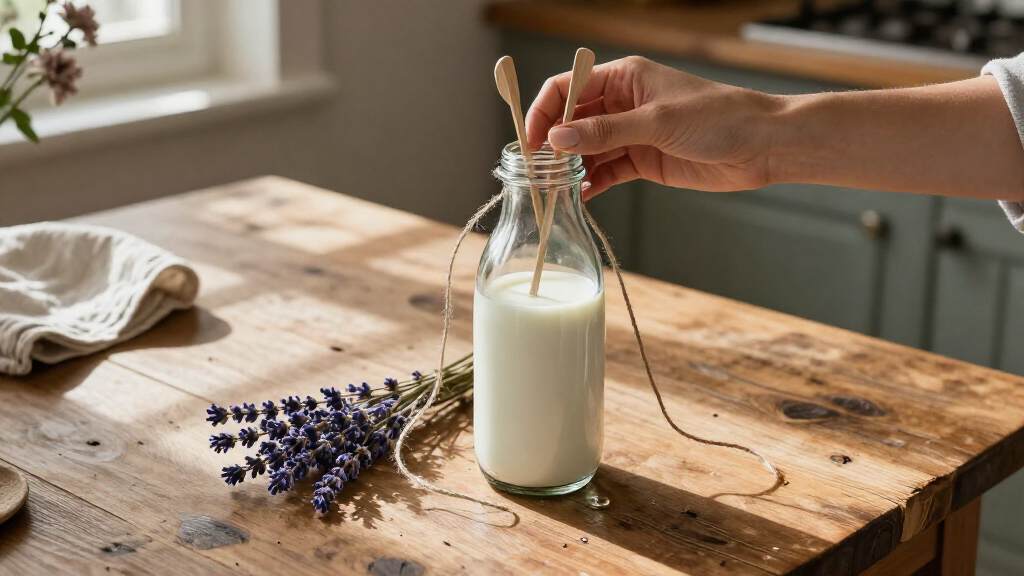
According to the Hunker guide, the basic method starts with a clean, empty glass bottle and wooden skewers attached vertically around its outside. The guide says to apply a thin line of hot glue near the bottle’s base, then place the skewers with their pointed ends facing the mouth. They can be packed close together for fuller coverage or spaced apart so some glass remains visible. Painting the bottle first is suggested as an optional way to conceal the glass beneath the skewers.
The Hunker instructions say that after the glue has set, excess skewer length can be trimmed with a wire cutter. Twine wrapped around the top and bottom holds the sticks together and adds texture. The instructions suggest securing the upper skewers temporarily with a rubber band before wrapping, then using glue if needed to stop the twine from loosening. A narrow cardboard band fitted around the neck, optionally decorated with wooden beads, is another finishing detail.
The guide presents three uses for the finished bottle: leave it as a standalone decorative piece, fill it with dried stems, wildflowers or greenery, or use it as a lantern with a battery-operated candle or string light. For floral arrangements, it suggests adding floral foam to help hold stems in place. Suggested display spots include a console table, mantel or dining table centerpiece.
Three ways to style old milk bottles with skewers and twine
A simple bottle reuse project creates a textured accent, a vase, or a lantern. The guide shares assembly ideas but no full project cost or safety instructions.
Three finishes, one bottle
Choose how the finished bottle will work in your home.
Keep it standalone
Display the skewer-and-twine texture on its own.
Add stems or greenery
Use dried stems, wildflowers, or greenery; floral foam can help hold stems in place.
Use battery lighting
The guide suggests a battery-operated candle or string light.
Build the textured cover
The core method attaches vertical skewers, trims them, then binds them with twine.
Apply a thin line of hot glue near the base of a clean bottle. Place skewers with pointed ends facing the mouth.
After the glue sets, trim excess skewer length with a wire cutter.
Wind twine around the top and bottom to hold the sticks together. A cardboard neck band and beads are optional.
Set the look and display
Spacing changes how much of the glass shows through.
- Pack skewers close together for a fuller look.
- Paint the bottle first if you want to conceal the glass beneath.
- Leave gaps between skewers to show some glass.
- Display on a console table, mantel, or dining table centerpiece.
Three Uses for One Bottle
The Hunker project gives readers a practical way to reuse glass milk bottles rather than send them to the bin, while offering several finishes from the same basic construction. A bottle can be left as a textured accent, adapted to hold flowers or greenery, or fitted with a battery-operated light. That flexibility may make the craft useful for people looking for low-cost decor or a simple reuse project.
The guide’s materials list includes skewers, thin jute twine, a hot glue gun and a wire cutter; paint and beads are optional. It cites a pack of 100 bamboo skewers sold by Dollar Tree for $1.25 and suggests salvaging sticks from an old bamboo table mat. That price applies only to the cited skewers, however: it does not establish the total project cost, which depends on what supplies a person already owns.
Products Worth Considering

Dyson Car+Boat Cordless Handheld Vacuum

Ring Alarm 14-Piece Kit

eufy Security 5-Piece Home Alarm Kit
As an affiliate, we earn on qualifying purchases.
From Bottle to Decor
The Hunker instructions are built around a simple sequence: attach the skewers, trim them to length, and bind them with twine. Spacing is a design choice rather than a fixed requirement; closer placement creates a more covered look, while gaps leave the bottle visible. The suggested neck band and beads are optional additions, not part of the core assembly.
The guide also proposes using trimmed skewer pieces as toothpicks in garden soil. It does not specify how to prepare or use those offcuts, so that suggestion is separate from the bottle-decorating steps. The finished bottle can be displayed empty or used with stems, greenery or battery-operated lighting, depending on the desired look.
Costs and Safety Details
The Hunker guide does not give a full materials budget, estimated completion time or information about how well the glue and twine hold up with repeated handling. It also does not specify the bottle’s dimensions, the amount of twine required or whether particular glue is recommended for different glass surfaces. The Dollar Tree price is a listed example for skewers, not a price guarantee or a total-cost estimate.
No safety instructions are provided in the guide for handling the hot glue gun, cutting skewers or placing lights inside the bottle. Its lantern option specifically names battery-operated lighting; it does not recommend an open flame. Readers should follow the tool makers’ instructions and avoid leaving a light source unattended. The guide’s advice about using offcuts in garden soil is not supported with details about suitability or safe use.
Choose a Finish and Display
The next step for anyone trying the project is to gather a clean glass bottle, skewers, twine, hot glue and a wire cutter, then decide whether the sticks should cover the bottle fully or leave visible gaps. Paint, beads and a cardboard neck band can be added if desired. The Hunker guide gives no later event, product launch or follow-up development; the project remains a set of do-it-yourself instructions.
Once assembled, the bottle can be left as an accent, arranged with dried or fresh stems, or fitted with a battery-operated candle or string light. Readers should check that the bottle is stable and that added decorations and lighting are suitable for the chosen display location.
Source: Hunker
Key Questions
What supplies are needed to decorate a milk bottle?
The Hunker guide’s basic list is a glass milk bottle, wooden skewers, thin jute twine, hot glue and a wire cutter. Paint, wooden beads, a rubber band and a narrow strip of cardboard are optional.
How do the skewers attach to the bottle?
According to the guide, apply a thin layer of hot glue near the bottle’s base and attach skewers vertically, with their pointed ends facing the mouth. Trim the excess length, then wrap twine around the top and bottom to hold the sticks together.
Can the decorated bottle hold flowers?
Yes. The guide suggests using it with dried stems, wildflowers or greenery. It also recommends floral foam if you want to keep stems in place.
Can the bottle be used as a lantern?
The guide suggests placing a battery-operated candle or string light inside. It does not recommend an open flame or provide detailed lighting safety instructions.
How much does the project cost?
The guide lists one example: a pack of 100 bamboo skewers priced at $1.25 at Dollar Tree. It does not give a total project cost, and suggests reusing skewers from an old bamboo table mat as another option.
Source: hunker.com