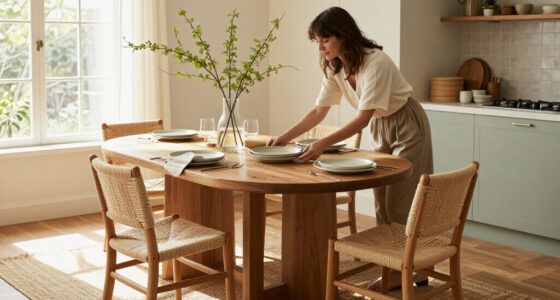
To mix dining chairs and benches smartly, start with a cohesive color palette using subtle contrasts or complementary hues to create harmony. Combine textures like fabric-upholstered chairs with sleek tabletops or rustic wood with metal accents for visual interest. Consider proportions and style motifs to keep the look balanced and cohesive. Experiment with different seating options to enhance both functionality and personality. Keep these tips in mind, and you’ll discover how to craft a stylish, inviting space that truly reflects your taste.

Get furniture and decor delivered free with Prime
- Fast, free delivery on millions of items
- Prime Video, Amazon Music and more included
- Member-only deals all year
Key Takeaways
- Choose a neutral or matching color palette to unify chairs and benches visually.
- Mix textures and materials, like fabric chairs with wooden or metal benches, for contrast and interest.
- Maintain consistent design motifs or finishes to create harmony across different seating types.
- Balance proportions and scale to ensure comfort and visual cohesion in the arrangement.
- Incorporate accent colors or unique details to personalize the space without overwhelming the aesthetic.

Mixing dining chairs and benches can create a stylish and functional dining space that feels both inviting and personalized. When you’re blending different seating options, one of the most effective ways to achieve harmony is through smart color coordination. You want the pieces to complement each other without clashing. Think about selecting colors that are within the same palette or that subtly contrast. For example, if your dining table is a warm oak, choose chairs in shades of beige, soft gray, or even muted blues that won’t overpower the space. A bench in a neutral tone can serve as a grounding element, while accent chairs add pops of color that bring personality without overwhelming. The key is balance—if your bench is a bold, vibrant hue, keep the chairs more subdued, and vice versa. This way, you create a cohesive look that feels intentional rather than chaotic.
Material contrast is another vital aspect to consider when mixing seating options. Combining different textures adds visual interest and depth. If your table is made of sleek glass or polished wood, pairing it with fabric-upholstered chairs can soften the look and make the space more inviting. Conversely, if your table is rustic or reclaimed wood, metal or leather chairs can add a modern edge. Don’t be afraid to experiment—mixing materials like wood and metal, fabric and leather, or even rattan and velvet can elevate your design. The contrast shouldn’t be jarring, though; aim for harmony by balancing the textures and ensuring they complement the overall style of your dining area. For instance, a rough-hewn wooden bench paired with smooth, upholstered chairs can create a cozy yet contemporary vibe. Understanding material contrast is essential for creating a balanced and visually appealing space. Incorporating visual harmony can help you seamlessly blend different elements to achieve a polished look. Paying attention to design motifs can also unify diverse pieces and reinforce the overall aesthetic. Additionally, considering furniture proportions ensures that your seating arrangements are both comfortable and visually balanced. Incorporating space-saving solutions can also maximize your small dining area without sacrificing style or comfort.
When you combine color coordination and material contrast thoughtfully, your dining setup becomes more than just functional—it turns into a statement piece. Pay attention to the proportions and scale of your furniture too, making sure that chairs and benches are similar in height for comfort and visual balance. Don’t be afraid to mix styles, but keep a common thread—perhaps a shared color, finish, or design motif—that ties everything together. With this approach, your dining space will feel curated yet relaxed, inviting guests to sit down and stay awhile. Ultimately, the goal is to create a space that reflects your personality while remaining visually appealing and comfortable for everyday use.
Products Worth Considering

Google Nest Learning Thermostat (4th Gen) with Nest Temperature Sensor (2nd Gen), Obsidian

TCL 65-Inch T7 Series 4K QLED Smart Google TV, 144Hz (65T7)

Ring Alarm 14-Piece Kit
As an affiliate, we earn on qualifying purchases.
Frequently Asked Questions
How Do I Choose the Right Height for Chairs and Benches?
You should choose a chair height that offers a comfortable comfort level, typically around 18 inches from the floor, guaranteeing easy sitting and standing. For benches, pick a height that complements the chairs, usually also around 18 inches, to maintain uniformity. Consider seating capacity too—higher benches maximize space, but ensure everyone can sit comfortably without feeling cramped. Balance style and function for a cohesive, inviting dining area.
What Materials Work Best When Mixing Chairs and Benches?
Material choices matter when mixing chairs and benches. You’ll want durable materials like hardwood, metal, or sturdy plastics that withstand wear and tear. Combining contrasting styles, like sleek metal with rustic wood, adds visual vibrancy. Think about balancing bold, beautiful materials with complementary textures to create a cohesive, engaging look. By blending durable, stylish materials with deliberate contrast, you craft a charming, resilient dining space that’s both functional and fashionable.
How Can I Create a Cohesive Look With Different Styles?
To create a cohesive look with different styles, you should focus on connecting them through decorative accents and texture contrast. Incorporate similar color palettes or materials across your chairs and benches, and add decorative accents like cushions or throws for visual unity. Using texture contrast, such as combining smooth and textured surfaces, helps balance diverse styles. This approach guarantees your dining area feels harmonious despite varied furniture styles.
Should I Match the Color Scheme of Chairs and Benches?
Yes, matching the color scheme creates harmony, but don’t overlook the power of contrast. Color coordination can unify your space, making different styles feel intentional. Alternatively, experiment with pattern mixing by choosing complementary hues or bold accents to add visual interest. The key is balancing these elements so your dining area feels cohesive yet lively. Stay bold, and let your unique style shine through!
How Do I Arrange Mixed Seating for Optimal Space?
To arrange mixed seating for the best space, start by prioritizing lounge comfort and visual balance. Place benches along walls or in corners to maximize open space, while positioning chairs around the table for easy access. Mix heights and styles thoughtfully to create visual interest without clutter. Keep pathways clear and distribute seating evenly to maintain harmony, ensuring everyone has comfortable, inviting options that enhance your dining area’s overall flow.
Conclusion
Mixing dining chairs and benches is like conducting a symphony, where every instrument plays its part in harmony. When you choose pieces that complement each other’s style and scale, your table becomes a melody, inviting conversation and comfort. Trust your eye, listen to your space, and let your unique taste be the conductor. With a little finesse, your dining area will sing with personality and warmth, turning every meal into a beautifully orchestrated experience.