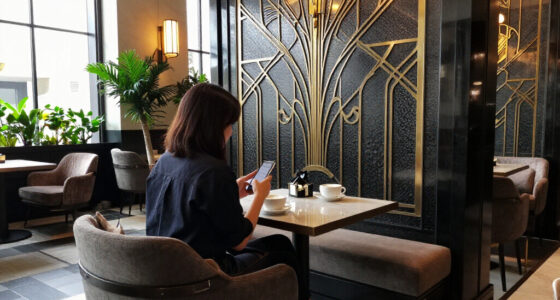

TL;DR

Get furniture and decor delivered free with Prime
- Fast, free delivery on millions of items
- Prime Video, Amazon Music and more included
- Member-only deals all year
Interior designers say clients increasingly bring AI-generated room images to consultations without realizing that the pictured furniture or layouts may not exist or work in a real home. The report describes studios’ efforts to distinguish built projects from visual concepts, while noting that image detection and platform labeling remain imperfect.
Interior designers interviewed by Livingetc say clients are bringing AI-generated room images to consultations and asking for designs that may be physically impossible or based on nonexistent products. The report highlights a growing gap between polished digital interiors and the practical work of planning, sourcing and building a real room.
The designers describe clients arriving with finished-looking visuals made from a photograph and a text prompt, rather than only magazine clippings or Pinterest boards. In some cases, the furniture shown cannot be bought, a layout conflicts with building regulations, or doors and drawers are depicted in ways that would prevent them from opening. The report says clients often select images because they appeal to them, not because they know the images are synthetic.
Kelly and Graeme Smith, founders of the design studio SPELK., say that a successful interior project involves far more than producing an attractive image. The work includes scheduling, procurement, budgeting, regulatory requirements and coordination with tradespeople. A generated image, by itself, cannot show whether its designer can carry out those tasks or whether the scene can be built in a particular home.
The designers say they sometimes share AI images or 3D visualizations, but label them as concepts. They report that viewers may miss captions while scrolling, and that clients have brought in saved images they did not realize were AI-generated. As a result, designers spend time explaining why a requested room, object or arrangement cannot be recreated as shown.
Why Buildability Matters to Clients
The distinction affects what clients can reasonably expect from a design consultation. A visually convincing image can suggest that a room, piece of furniture or finish is available and ready to reproduce, even when it was generated without regard to measurements, construction methods or building rules. That can lead to misaligned expectations before a project begins.
It also changes how design studios present their work. The report says designers must show not only a polished result but evidence of the process and experience behind it. For clients, checking whether an image is a concept or a photograph of a completed project can help separate inspiration from a buildable plan; it does not, by itself, establish whether any particular studio has misrepresented its work.
realistic interior design visualization tools
As an affiliate, we earn on qualifying purchases.
As an affiliate, we earn on qualifying purchases.
From Mood Boards to Prompted Rooms
The designers describe a change in how clients communicate ideas: printed magazine clippings gave way to digital Pinterest boards, and clients now sometimes arrive with AI-generated images. The underlying task of translating inspiration into a functioning home remains, but the source image can now look like a finished photograph despite having no corresponding room.
Livingetc reports that pressure to post regularly on social media can make AI imagery tempting for studios with few completed projects to photograph. The designers say they do not assume that people sharing such images intend to deceive; however, they warn that audiences may misunderstand a concept even when a caption identifies it as AI. The report also notes that platform AI labels are optional and that metadata can be removed, limiting the reliability of those signals.
““Design for real rooms and real lives, not for trends or quick impact.””
— Kelly and Graeme Smith, founders of SPELK., as quoted by Livingetc
As an affiliate, we earn on qualifying purchases.
Limits of Spotting Synthetic Interiors
The report does not quantify how often AI images are mistaken for completed projects, how many clients have been affected, or how common deliberate misrepresentation is among studios. It also does not identify a universal method for verifying an image: the designers say metadata may be stripped, while platform detection tools and self-labeling are not definitive checks.
Some visual clues, such as impossible reflections or objects blending together, may raise questions but cannot establish an image’s origin on their own. The source mentions a developing legal backdrop in the EU but provides no details on specific rules, enforcement or their application to interior-design portfolios. Those points remain unclear from the report.
As an affiliate, we earn on qualifying purchases.
How Studios May Show Their Work
The designers describe continuing to document projects in progress, film people on site and share less-polished details alongside finished rooms. These steps can offer clients more evidence of a studio’s practical experience, though the report does not say they are formal standards or guarantees of authenticity.
For clients, the immediate next step is to ask whether an image is a concept, a rendering or a photograph of completed work, and to discuss measurements, sourcing, construction and regulatory requirements before treating it as a plan. How platforms, regulators and design businesses will address misleading or unlabeled AI imagery remains developing.
interior design project planning software
As an affiliate, we earn on qualifying purchases.
As an affiliate, we earn on qualifying purchases.
Key Questions
Why might an AI-generated room be impossible to build?
An image may show furniture that does not exist, a layout that does not meet building regulations, or doors and drawers without enough space to operate. A convincing image does not establish that its objects or arrangements are physically workable.
Are designers saying every AI interior image is deceptive?
No. The designers quoted by Livingetc say people may share AI visuals as concepts or inspiration without intending to mislead. They say viewers can still mistake an image for a completed project, particularly if they miss its caption.
How does SPELK. show that a room has been built?
The studio says it photographs projects during construction, films its photographer on site and includes people and everyday details in images. These are the studio’s methods, not a guarantee that every image elsewhere can be verified in the same way.
Can metadata or platform labels reliably identify AI images?
The report says metadata can be removed and that social platforms are beginning to use detection models while asking users to self-tag AI content. It describes labeling as optional and does not present either method as a conclusive test.
Source: rss
Halloween Picks
halloween
As an affiliate, we earn on qualifying purchases.