TL;DR
Globes de mariée, French wedding keepsakes displayed beneath glass domes, have attracted renewed interest among antique buyers. Austin Auction Gallery says it has sold more than 150 in the past couple of years, averaging $400 to $600 each, compared with the $30 to $40 they once fetched at the gallery.
French wedding keepsake globes, known as globes de mariée, have found a larger market among antique buyers, with one Texas auction gallery reporting average sale prices of $400 to $600. Chris Featherston, senior vice president of product acquisition at Austin Auction Gallery, said the gallery and his family have sold more than 150 globes in the past couple of years, a marked contrast with the $30 to $40 they once brought there.

Get furniture and decor delivered free with Prime
- Fast, free delivery on millions of items
- Prime Video, Amazon Music and more included
- Member-only deals all year
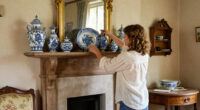
The objects are glass-domed displays made to preserve wedding mementos, especially a bride’s headpiece or crown. Their arrangements vary, but commonly include a red cushion, beeswax orange blossoms, small mirrors and a decorative wreath. The dome, or cloche, protected the keepsakes from dust, and continues to do so.
Featherston said demand has risen over the past five years. He recalled that when the family business began dealing in French antiques, globes were common in house clearances in France and could sell for $30 to $40. The gallery’s more recent sales average $400 to $600 each. Those figures describe one dealer’s experience; no wider market survey or sales database was provided.
Mick and Paige Whitcomb, collectors who have owned globes for nearly a decade, now have 15. They first encountered them at the Marché aux Puces antique market in Paris during an anniversary trip. Mick said the objects’ appearance caught their attention, while learning their connection to French marriage made them a meaningful keepsake of the trip.
Why wedding globes are popular again
Globes de mariée preserve wedding keepsakes beneath glass. One Texas auction gallery reports stronger demand and higher prices, while broader market data remains unavailable.
A keepsake beneath glass
These French displays were used in the 19th and 20th centuries to preserve wedding-day mementos.
Made for one couple
A bride’s crown or headpiece sits among objects chosen to reflect a couple’s life and hopes.
A cloche keeps dust away
The glass dome protects varied contents, which can include photographs and prayer cards.
What collectors value
Craftsmanship, personal history and symbolic details give each display its own character.
Red cushions, beeswax orange blossoms, mirrors and decorative wreaths are common motifs.
Flowers and mirror shapes have customary interpretations, but they do not prove what a particular couple intended.
Collectors also pair the globes with work by living artists in contemporary interiors.
A reported price rise, with limits
The figures describe one dealer’s experience, not the wider antiques market.
- Average recent sales of $400 to $600 each
- More than 150 sold in the past couple of years
- Demand rising over the past five years
- Prices at other dealers or auction houses
- How condition, size or rarity affect prices
- How much scarcity contributes to the trend
Finding one in the United States
Collectors say the globes can be harder to find in the United States than in Europe, partly because fragile domes are difficult to ship.
Why Collectors Value Wedding Globes
The reported price shift offers a specific example of how a once-common domestic antique can become more sought after as collectors attach new value to its history, craftsmanship and symbolism. For buyers, the globes are not simply decorative glass domes: they preserve personal objects and clues about the hopes a couple attached to marriage.
That appeal also creates practical considerations. Their glass covers can make the pieces difficult to transport, and their bespoke contents mean no two displays are quite alike. Mick Whitcomb said they are harder to find in the United States than in Europe, partly because importers may be reluctant to ship fragile domes. These factors help explain why interested buyers may encounter them less often, though the available information does not establish how much scarcity contributes to prices.
The collecting trend also brings an old-fashioned object into contemporary interiors. Paige Whitcomb said she likes pairing the globes with work by living artists, using art with a historic feel to connect pieces from different periods. That approach treats the globes as both historical artifacts and active parts of a modern collection.
Products Worth Considering

Hisense E6 Cinema Series 85-Inch 4K UHD Hi-QLED Smart Fire TV

Philips Hue Play Gradient Light Tube, Large, Black

Blueair Blue Pure 311i Max Smart Air Purifier
As an affiliate, we earn on qualifying purchases.
From French Homes to Auction Sales
Globes de mariée were used in France during the 19th and 20th centuries to preserve wedding-day memories. A bride’s crown or headpiece often sat inside, surrounded by keepsakes chosen to represent the couple’s life and aspirations. The highly personal contents mean each globe reflects its owners rather than following a single fixed design.
Some common motifs carry symbolic meanings. Orange blossoms made of beeswax are associated with purity and virginity. Diamond-shaped mirrors are said to represent the number of children a couple hoped to have, while rectangular mirrors could indicate how long they had known one another before becoming engaged. Wreaths decorated with brass flowers, birds or leaves are linked to love, a lasting marriage and happiness. These interpretations describe customary symbolism, not proof of what any individual couple intended.
Paige Whitcomb said the contents can also preserve intimate traces of a particular couple, including prayer cards and photographs. She has found hair and teeth in some displays, turning them into mementos that also evoke mortality. Her observations illustrate the range of objects collectors may encounter, rather than a standard feature of every globe.
“In the early days of our business, most of what we sold came from house clearances in France. These globes were ubiquitous. At that time, we felt lucky to be able to sell them for $30 to $40 each.”
— Chris Featherston, senior vice president of product acquisition at Austin Auction Gallery
How Broad Is the Price Rise?
The available figures come from Austin Auction Gallery and do not establish prices across the broader antiques market. The gallery reported more than 150 sales over the past couple of years and an average of $400 to $600 each, but did not provide a precise sales period, a breakdown by condition or size, or a method for calculating the average.
It is also unclear how many globes are currently available, whether prices have risen at other dealers or auction houses, and how much of the reported increase reflects demand, condition, rarity or differences in the pieces being sold. Featherston described demand as rising over the past five years, but no independent market data was provided to measure the trend.
Symbolic readings also require care: a mirror shape or ornament may have a customary interpretation, but the globe’s individual makers and owners are not always known. Buyers may not be able to verify the story behind every item inside a display.
More Globes in Upcoming Sales
Featherston said Austin Auction Gallery tries to include several globes de mariée in every sale. That gives interested buyers a recurring opportunity to see examples at auction, though it does not guarantee a particular number, condition or price in any future event. No upcoming sale date or specific listing was provided.
For collectors searching in the United States, Whitcomb said design-focused antique dealers, online auction sites and prop houses that have finished a period film project have yielded finds. Buyers should check the condition of the glass dome and the objects inside, and seek clear information about provenance where available. The next indication of whether interest is continuing will be future sales and prices; broader market data remains unavailable.
Key Questions
What is a globe de mariée?
A globe de mariée, or marriage globe, is a French wedding keepsake display from the 19th and 20th centuries. It typically places a bride’s headpiece or crown and other personal mementos beneath a protective glass dome.
Why are these French antiques attracting collectors?
Collectors value their detailed craftsmanship, varied contents and connection to individual marriages. Their symbolism and personal keepsakes also make each display distinct, while collectors say they can be difficult to find in the United States.
How much do globes de mariée cost?
Austin Auction Gallery reported average prices of $400 to $600 each in its sales over the past couple of years. The gallery said it once sold them for $30 to $40, but those figures are not a survey of the wider market.
What do the mirrors and flowers inside mean?
Common interpretations associate beeswax orange blossoms with purity and virginity, diamond-shaped mirrors with the number of children a couple hoped to have, and rectangular mirrors with the length of their courtship before engagement. Wreath ornaments are linked to love, longevity and happiness. Meanings may vary, and the symbolism does not confirm what a particular couple intended.
Where can buyers look for a marriage globe?
Collector Mick Whitcomb said he has found them through design-focused antique dealers, online auction sites and prop houses after period film projects. Austin Auction Gallery also aims to include several in each sale, according to Featherston. Availability and condition vary.
Source: housebeautiful.com