TL;DR

Get furniture and decor delivered free — and shop member deals
- Fast, free delivery on millions of items
- Access to Prime Big Deal Days deals on October 6–7
- Prime Video, Amazon Music and more included
Luxury velvet accent chairs pair a soft, light-catching pile fabric with a compact seat that can add comfort and color to a room. Choose by checking the fabric content and care instructions, trying the seat proportions, measuring its footprint, and comparing construction and warranty details. Order a sample when possible, since velvet color can shift with light and viewing angle.
A velvet chair can look emerald at noon and nearly black after sunset. That shifting sheen is part of its charm—and one reason an online photo may not tell you what will arrive at your door.
This guide helps you choose a luxury velvet accent chair that feels comfortable, fits your space, and suits the way you live. You’ll learn what to check in the fabric and frame, how to judge size and color, and which care questions to ask before you buy.
Order a fabric sample and check it in both daylight and evening light; velvet’s pile can make a color look lighter or darker.
Compare fiber content and the maker’s care guidance before choosing velvet for a home with pets, children, or heavy daily use.
Test seat height, depth, back support, and cushion firmness against the time you expect to spend in the chair.
Measure the chair’s full footprint and leave clearance for paths, doors, and any swivel or reclining movement.
Compare frame and cushion construction, warranty, repair support, and return terms instead of relying on the word “luxury.”
What makes a velvet chair feel luxurious?
A luxury velvet accent chair combines a soft, dense pile with a standalone seat designed to add comfort and visual interest. The fabric catches light in a gentle sheen, while its short fibers feel smooth under your hand. A good chair pairs that inviting surface with thoughtful construction and proportions that suit your body. These details work together: a rich-looking fabric can draw the eye, but if the seat is uncomfortable or the upholstery wears poorly, the chair may become something you admire rather than use.
Velvet’s pile works like grass brushed in different directions: the color can look lighter from one side and deeper from another. In a sunny living room, a navy chair may show a bright blue streak where afternoon light skims the seat. That movement gives the fabric depth, but it also means the chair’s appearance will change as you move around the room. A sample helps you judge not just the color, but whether that shifting effect suits the room’s lighting and the mood you want.
The word luxury is not a standardized quality grade. Price and branding alone can’t tell you whether the frame, seams, cushions, or service are worth the cost. Compare those details directly, and request fabric specifications and care guidance before you commit. This matters because the qualities that make a chair feel special on day one—its surface, shape, and finish—are only useful over time if the parts beneath them support regular use.
Which velvet fabric can handle your daily routine?
The right velvet depends on its fiber content, care instructions, and household use. Cotton, polyester, viscose, silk, and blended velvets can feel and perform differently; synthetic and blended options are often chosen for everyday durability and simpler care, while silk velvet needs more delicate handling. These are useful tendencies, not guarantees: the weave, finish, and manufacturer’s instructions also affect how a particular fabric responds to wear and cleaning. Don’t assume all velvet cleans the same way.
For example, if your chair will sit beside a child’s craft table, ask whether the fabric has performance treatment and what the maker’s cleaning guidance allows. A treatment may make some spills easier to address, but it doesn’t make every stain harmless or every cleaning method safe. “Performance” is a product claim, not a guarantee, so check what tests support it and whether the warranty covers stains or wear. The answers help you decide whether the extra ease is real enough to justify the price or whether a less demanding placement would suit the chair better.
- Check the label: Confirm fiber content and cleaning instructions.
- Ask about wear: Request test details and warranty terms for performance-treated fabric.
- Think about the room: Pets, children, direct sun, and frequent sitting can affect what works for you.
Velvet can suit everyday use when the fabric and care requirements fit your home. It may show lint, pet hair, pressure marks, or changes in pile direction, especially in darker or more saturated colors. That visibility is a practical tradeoff: a dramatic color may make the chair a focal point, while a lighter or more muted shade may make everyday traces less noticeable.
How to check comfort before you buy
To judge a chair’s comfort, check its seat height, depth, back angle, arm height, and cushion firmness, then match those proportions to how you plan to use it. Each measurement changes how your body settles: a deep seat may feel lounge-like but leave shorter legs unsupported, while a shallow seat may suit conversation but feel restrictive for relaxing. A sculptural chair can look striking in a corner but feel tiring if you sit in it for an hour with little back support. If you can, sit in the chair before buying.
- Measure your favorite seat. Note its height and depth so you have a familiar comparison. This gives you a practical starting point, though the back angle and cushion can make two chairs with similar measurements feel different.
- Check the posture. Sit back and see whether the back supports you without forcing your shoulders forward. If you have to perch or slump to feel comfortable, the shape may not suit longer visits.
- Test the cushion. Notice whether it feels supportive or sinks more than you like. A softer cushion can feel welcoming at first, while firmer support may be more comfortable over time; the right balance depends on your body and intended use.
- Match the use. A reading chair needs more support than a seat used for short visits. Comfort requirements help determine whether a compact accent chair can serve as a regular seat or is better treated as occasional seating.
Imagine placing a compact velvet chair by a bedroom window for evening reading. A low, angled seat might photograph beautifully, but a firmer cushion and supportive back will matter more once you settle in with a book. If the chair is meant for reading, compare how long you can sit comfortably with the visual appeal you’re choosing it for.
Which construction details are worth checking?
A chair’s lasting quality depends on its frame, joinery, suspension, cushion filling, and upholstery seams, not just the fabric. Hardwood or engineered-wood frames can both be sturdy when well made, so the material name by itself doesn’t settle the question. The way parts are joined and supported affects how the seat responds to repeated use; ask about the frame’s construction and the maker’s warranty to understand what the seller stands behind.
Look closely at the upholstery where the fabric wraps around corners and meets seams. Neat, even stitching suggests careful finishing, while a cushion that shifts or sags in a showroom deserves a closer look. A fixed cushion can give the chair a clean, tailored appearance, but it may be harder to refresh if the filling compresses. Removable cushions and replaceable covers can make upkeep easier, though not every velvet chair offers them and removable parts may fit less seamlessly.
For instance, if two chairs look similar online, ask each retailer whether the seat cushion can be replaced and who handles repairs. A clear answer gives you a better sense of what ownership might involve if the chair wears unevenly or needs service. That answer may matter more after years of use than a small difference in list price.
How to make the chair fit your room
A velvet chair fits well when its full footprint, visual weight, and placement work with the room around it. Measure the chair’s width and depth, then leave room to walk past it and open nearby doors. Include swivel or reclining space if the chair moves. A chair that fits on paper can still make a room awkward if it interrupts a path or crowds a door, so imagine the space needed for people to use it, not just the space it occupies when stationary.
In a small apartment, a rounded occasional chair in a spare corner can turn unused floor space into a reading nook. In a larger living room, two chairs angled toward a sofa can make conversation feel natural without matching the sofa’s fabric or shape. Choose a role first: focal point, companion seat, or a practical place to sit near the entry. That decision helps narrow the size and shape; a statement chair may deserve breathing room, while a companion seat should fit the conversation area without blocking it.
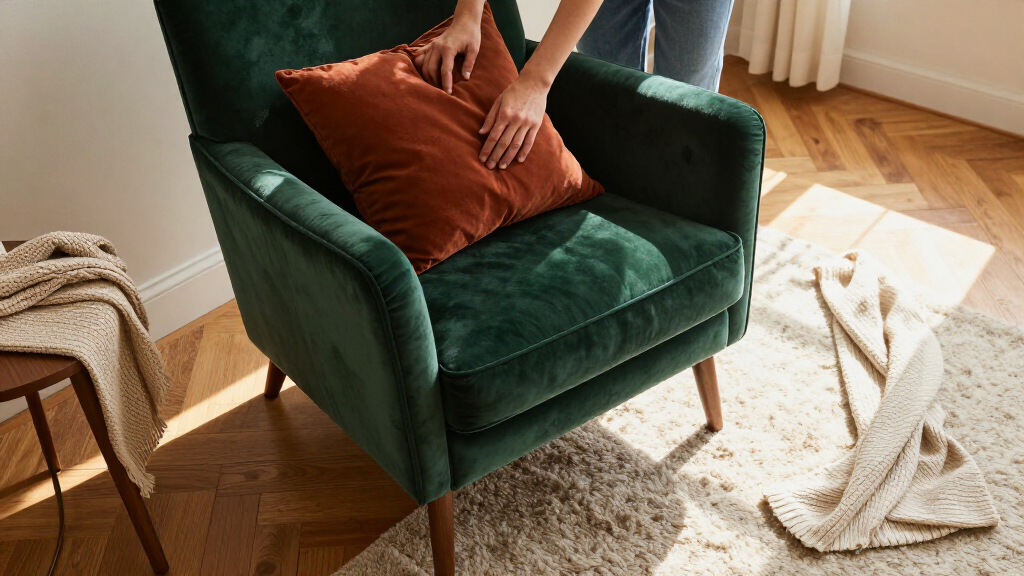
Velvet’s rich surface can anchor a room, so coordinate through one shared detail rather than matching every piece. A rust chair can sit comfortably beside a neutral sofa if its wood legs echo a coffee table or its warm color repeats a rug detail. Repeating one element creates a visual connection while letting the chair stand apart, which can keep a room from feeling too coordinated or crowded with competing colors.
How to choose a velvet color that looks right at home
Choose a velvet color by viewing it in the actual daylight and evening light of your room. The pile can shift in appearance with its direction, and screens can distort color, so a small sample gives you a better sense of what to expect. Set it beside the sofa and look at it at different times of day. This is especially useful when the chair’s color is meant to tie together existing furnishings: a sample reveals whether the connection holds under the light you actually live with.
A deep green may glow beside a bright window but read almost charcoal under a warm lamp. Jewel tones, warm neutrals, and deep blues or greens are common choices, but none will look identical in every home. If you can’t get a sample, ask the seller for photos in more than one lighting condition and review the return terms. Photos can help reveal a color’s range, but they can’t reproduce the way pile direction changes as you walk around the chair.
For a home with strong afternoon sun, consider a spot away from direct exposure or use window coverings. Some upholstery can fade after prolonged direct sunlight; check the maker’s guidance and rotate furniture when practical. This placement choice can help preserve the color, though it may mean prioritizing a less sunny corner over the spot where the chair would be most convenient.
What to compare before paying more
Compare chairs by materials, workmanship, comfort, warranty, and service, because the word “luxury” alone does not verify quality. A higher price may buy better support or repair options, but it may also reflect branding or a distinctive silhouette. Read the details before you treat cost as a quality signal. The comparison is most useful when you first decide which features matter for your home: a rarely used statement seat may not need the same repair options as a chair you use every day.
| What to compare | Questions to ask |
|---|---|
| Fabric | What fibers are used, and how should you clean them? |
| Construction | How are the frame, joints, suspension, and cushion made? |
| Fit | Do the seat dimensions and back support suit your intended use? |
| Ownership | What do the warranty, delivery, return, and repair terms cover? |
Say you’re choosing between a lower-priced chair with fixed cushions and a costlier one with a replaceable cover and clearer repair support. If both fit your room and feel comfortable, the second option may offer better value over time—provided its extra cost fits your budget. If you expect little wear or don’t plan to keep the chair for long, the extra features may have less value to you. The better buy is the one whose added benefits match how you’ll use and keep the chair.
How to keep the fabric looking its best
Keep velvet in good shape with gentle, fabric-approved care and prompt attention to spills. Vacuum lightly with an upholstery attachment, blot a fresh spill rather than rubbing it, and follow the chair maker’s instructions. Some fabrics need professional cleaning, so check before reaching for a household cleaner. Care matters because an unsuitable method can disturb the pile or leave a mark that draws more attention than the original spill.
If a cushion develops pressure marks, the pile may simply be lying in a different direction; brush only as the manufacturer directs. For example, if a guest leaves a temporary mark on the seat, try the recommended care method before assuming the color has changed permanently. Test any permitted method on a hidden area first. A cautious first step helps you distinguish a change in the pile’s appearance from a stain or damage that needs different attention.
Blot, don’t scrub: Rubbing can push a spill deeper into the pile or disturb the fabric’s surface.
Homes with pets or young children can still use velvet, but choose with realistic expectations. Ask about snagging and stain care, and think about whether a frequently used chair belongs in a lower-traffic spot. Choosing a fabric and location that suit your household can reduce upkeep, though it won’t remove the need to follow the maker’s care instructions.
Frequently Asked Questions
Is velvet suitable for everyday use?
Yes, when its fiber, construction, and care requirements suit your household. Check the maker’s guidance and consider pets, children, direct sun, and how often you’ll use the chair.
Will the chair’s color look the same as it does online?
Not always. Lighting, screen settings, and pile direction can all change how velvet appears. Order a sample when available and view it near the furniture in the room.
Does velvet show pet hair or marks?
Velvet can show lint, pet hair, pressure marks, and pile shading, with visibility depending on the color and fabric. Ask about cleaning and snagging before buying for a pet-friendly home.
How do I make a velvet chair work with my sofa?
Your chair doesn’t have to match the sofa exactly. Coordinate through color, shape, texture, or leg finish, and check that its scale suits the room and the nearby furniture.
What should I compare when two chairs have different prices?
Compare fabric specifications, frame and cushion construction, comfort, warranty, delivery, returns, and repair support. The listed price and the word “luxury” don’t establish how well a chair is made.
Conclusion
Choose your chair by matching fabric, comfort, construction, and room size to your real routine. A velvet sample in your own light and a careful sit test can tell you more than a polished product photo.
When the fit is right, that soft, shifting patch of color can make an overlooked corner feel like the best seat in the room.
Fall Picks
fall essentials
As an affiliate, we earn on qualifying purchases.