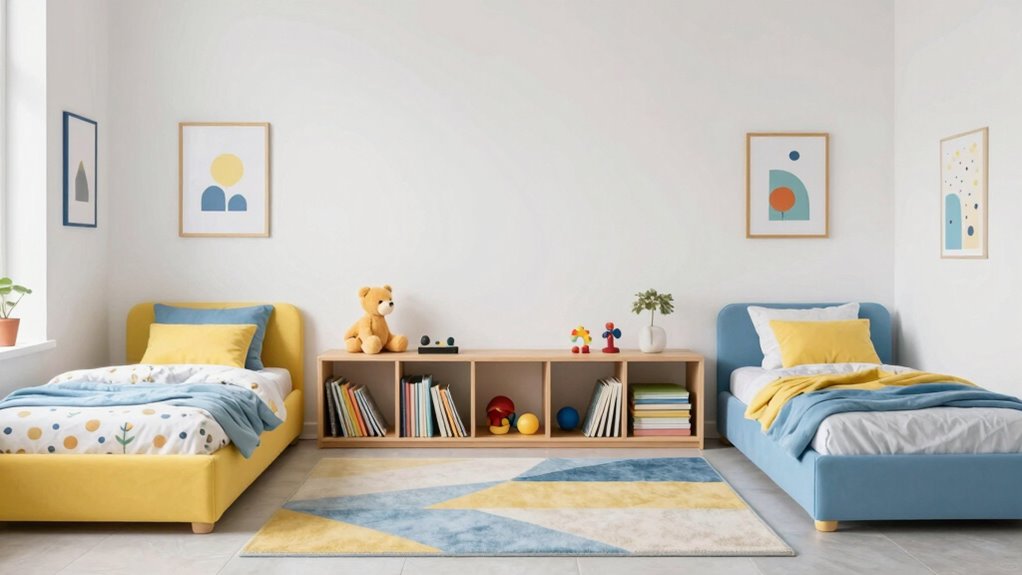

To make a shared kid room feel fair and functional, use neutral or complementary colors to create harmony while adding personal touches that reflect each child’s personality. Incorporate natural elements like plants and eco-friendly decor to boost liveliness and sustainability. Maximize space with smart storage solutions like labeled bins, adjustable shelves, and hidden compartments. Organize with defined zones for sleeping, studying, and playing to promote independence and reduce conflicts. Keep exploring for more tips to create a balanced, welcoming space.

Get furniture and decor delivered free — and shop member deals
- Fast, free delivery on millions of items
- Access to Prime Big Deal Days deals on October 6–7
- Prime Video, Amazon Music and more included
Key Takeaways
- Use neutral or complementary colors and personalized accents to create a cohesive, fair, and individualized environment.
- Incorporate natural elements and eco-friendly decor for a lively, sustainable space.
- Maximize storage with labeled bins, under-bed drawers, and adjustable shelves to promote organization and independence.
- Arrange furniture to define separate zones for sleeping, studying, and playing, avoiding overcrowding.
- Ensure each child has dedicated, personalized space with equal access to storage to foster fairness and reduce conflicts.
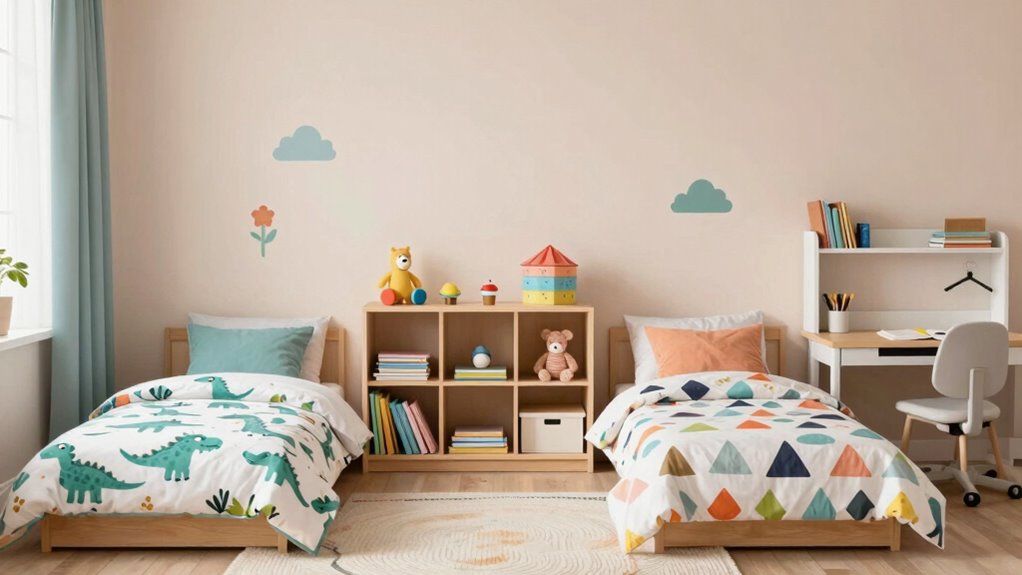
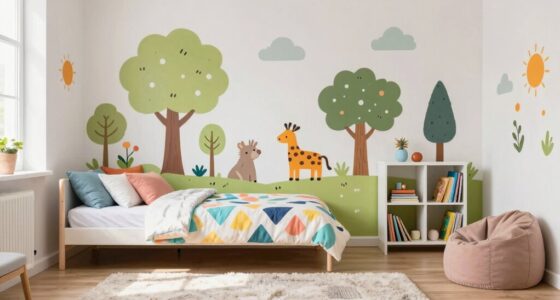
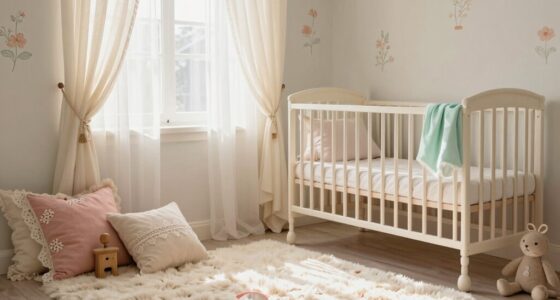
Sharing a kids’ room can be a great way to save space and encourage sibling bonding, but it also requires thoughtful planning to guarantee it feels fair and functional for everyone. One of the first things you’ll want to contemplate is how to create a balanced environment through color coordination. When selecting paint colors, bedding, and decor, aim for hues that are neutral or complementary, so neither child feels like their space is less special. Using a cohesive color scheme helps foster a sense of fairness and unity, while still allowing each child to add personal touches that reflect their personality. For example, you might choose soft pastel shades or muted tones and let each kid incorporate their favorite colors in accessories or artwork. This way, the room feels harmonious, yet personalized. Additionally, considering the importance of biodiversity in the environment can inspire you to incorporate natural elements like plants or eco-friendly decor, creating a more lively and sustainable space.
Creating a harmonious shared space with neutral colors and personalized touches fosters fairness and individuality.
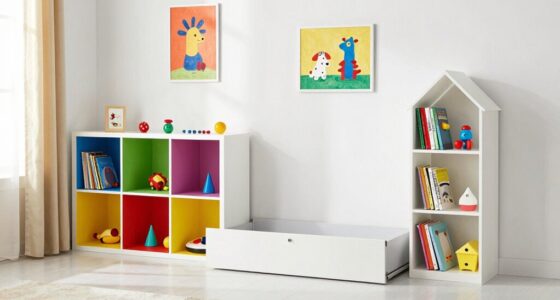
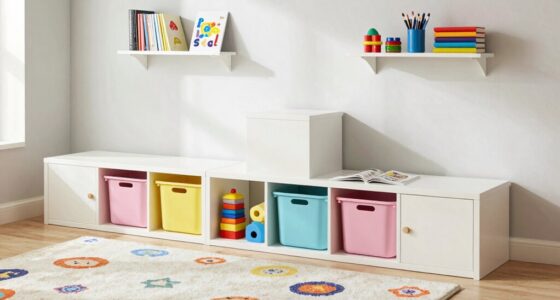
Equally important is implementing smart storage solutions that keep the room organized and clutter-free. Kids tend to accumulate toys, clothes, and school supplies quickly, so it’s crucial to have dedicated storage that’s easily accessible. Reflecting on installing multiple storage options, such as under-bed drawers, wall-mounted shelves, and cubbies at kid-friendly heights. This not only maximizes space but also encourages independence, as children can reach their belongings without needing constant help. Labeling bins or baskets can reinforce organization and ensure each child knows where their things belong, helping maintain fairness. When designing storage, opt for versatile pieces that can serve multiple functions, like a bench with hidden compartments or a desk with built-in drawers, to keep the room tidy without sacrificing style. Incorporating adjustable shelving can also accommodate your children’s growth and changing needs over time.
Balancing the room’s layout is key to making it functional and fair. Position beds and furniture to give each child their own defined space, avoiding overcrowding or favoritism. If possible, assign specific areas for sleeping, studying, and playing, so each kid has a sense of ownership. You can also use color coordination in bedding and curtains to differentiate their spaces subtly, making it easier for them to identify their zones. Incorporating personal storage spots, such as a small shelf for each child’s books or a designated drawer for personal items, fosters independence and ensures fairness. When everyone has their own organized space, conflicts over clutter or possessions tend to decrease, making the room more harmonious for both siblings. Paying attention to the room layout can help optimize the available space and improve overall functionality.
As an affiliate, we earn on qualifying purchases.
Frequently Asked Questions
How Can I Personalize a Shared Room for Each Child’s Interests?
You can personalize a shared room by incorporating personalized decor for each child, like custom name signs or favorite colors. Create distinct interest zones tailored to their hobbies—like a reading nook or art corner—so each feels special. Use storage solutions that reflect their personalities, and let them add their own accessories. This approach guarantees both kids feel valued and their individual interests are celebrated within a shared space.
What Are the Best Storage Solutions for Small Shared Spaces?
You can maximize small shared spaces with smart storage solutions like decorative shelving and under-bed storage. Use decorative shelving to display favorite books and toys, adding personality while keeping clutter off the floor. Under-bed storage offers hidden space for clothes, shoes, or seasonal items, freeing up room for play and sleep areas. Combining these options creates a tidy, organized environment that feels spacious and inviting for both kids.
How Do I Handle Conflicts Over Space or Belongings?
You can handle conflicts over space or belongings by setting clear boundaries and routines. Address sibling rivalry by encouraging open communication and teaching sharing skills. To maintain fair sleep schedules, create designated quiet zones and enforce consistent bedtime routines. When disputes arise, mediate calmly and remind them of the importance of respecting each other’s space. Regularly review rules together, fostering a sense of fairness and understanding in the shared room.
What Safety Tips Are Essential for Shared Children’s Rooms?
To guarantee safety in a shared kids’ room, follow basic safety guidelines like securing furniture to the wall, choosing non-toxic paint, and avoiding small, swallowable decor. Opt for room decor that encourages organization and easy access to belongings, reducing clutter and hazards. Regularly check for loose screws, sharp edges, or broken toys. By prioritizing safety guidelines and thoughtful decor, you create a secure, fun space that fosters cooperation and comfort for your children.
How Can I Involve Kids in Organizing Their Shared Room?
Sure, let your kids take charge of organizing their shared room—nothing screams teamwork like a chaotic toy organization session! Encourage them to pick decorating ideas and sort toys into bins, fostering responsibility and creativity. You might end up with a colorful, personalized space, or a delightful mess, but either way, they’ll learn the value of cooperation and decision-making. After all, what’s better than a shared room that’s truly theirs?
As an affiliate, we earn on qualifying purchases.
Conclusion
Creating a shared kid room is like tending a garden—each child’s needs are different seeds, and your care helps them flourish together. By fostering fairness and organization, you’re cultivating a space where everyone feels valued and comfortable. When you balance their individual personalities like sunlight and water, harmony blooms. With patience and thoughtful design, your shared room becomes a vibrant garden of cooperation, where sibling bonds grow strong and beautiful, rooted in fairness and function.
under bed storage drawers for kids
As an affiliate, we earn on qualifying purchases.
As an affiliate, we earn on qualifying purchases.
As an affiliate, we earn on qualifying purchases.
Fall Picks
fall essentials
As an affiliate, we earn on qualifying purchases.