
TL;DR
The Peabody Essex Museum’s YouTube channel demonstrates how to make a hanging sculpture from painted plastic bottles, cord and basic craft tools. The project is presented as decorative art inspired by Dale Chihuly’s colorful glass works, not as a glass replica or a tested light fixture.
According to a project video on the Peabody Essex Museum’s YouTube channel, plastic bottles can be turned into a colorful hanging sculpture with paint, scissors and cord. The craft takes inspiration from the dramatic forms of Dale Chihuly’s blown-glass chandeliers. The video demonstrates cut bottle spirals threaded together on cord; it does not establish the sculpture as a functional or safety-tested light fixture.

Get furniture and decor delivered free with Prime
- Fast, free delivery on millions of items
- Prime Video, Amazon Music and more included
- Member-only deals all year
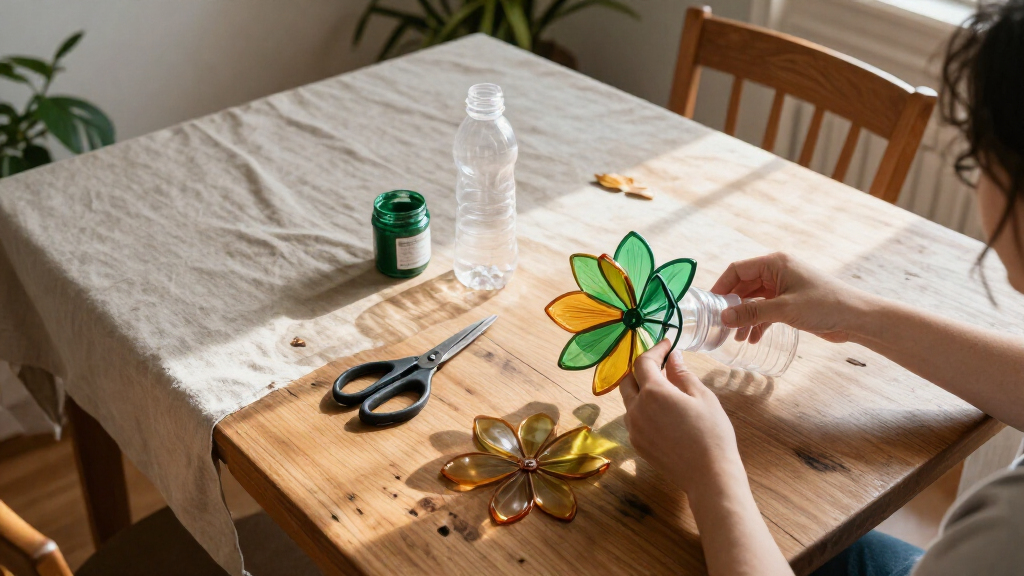
The Peabody Essex Museum video lists plastic bottles, paint suited to plastic, paintbrushes, scissors and strong cord as materials. The demonstration begins by removing the bottle labels and covering the bottles with paint. It shows a range of colors and allows the pieces to dry before cutting.
In the video, each hanging strand is made by cutting off a bottle’s bottom and cutting the remaining plastic into a continuous spiral. The cuts stop near the last row of ridges before the bottle narrows toward its neck. The resulting strip is intended to curl and spread outward. Repeating the process with several bottles creates multiple sculptural strands.
The demonstration shows the bottles threaded onto cord through their necks, with the tops nesting together. The cord is tied into a loop for hanging, while the cut spirals fan outward. The museum video uses a rainbow palette; its accompanying instructions also suggest choosing a more limited color scheme, such as pink and purple, blue and green, or red and orange.
Turn Plastic Bottles Into Hanging Art
A Peabody Essex Museum video shows how paint, cut bottle spirals and cord become a colorful hanging sculpture inspired by Dale Chihuly’s glass forms.
Gather the materials
The project uses basic craft supplies and household plastic.
Paint and cord
Use plastic bottles, paint suited to plastic, paintbrushes, scissors and strong cord.
Choose a palette
The video uses rainbow colors; the instructions also suggest pairings such as pink and purple or blue and green.
Make the sculptural strands
Let the paint dry before cutting and threading the bottles.
Remove labels, paint the surfaces and allow them to dry.
Remove each bottom, then cut the remaining plastic into a continuous spiral, stopping near the ridges below the neck.
Thread bottle tops onto cord so they nest together, tie a hanging loop and let the spirals fan outward.
Plastic craft, glass inspiration
The project borrows clustered, curling forms and vivid color from Dale Chihuly’s blown-glass chandeliers.
- Colorful, dramatic shapes
- Clustered forms that spread outward
- Painted plastic bottles
- Hand tools and cord
Display with care
The video presents the piece as hanging art, not a tested light fixture.
- Check that the cord and hanging point can support the finished sculpture.
- Fairy lights are mentioned as a suggestion, but the source gives no heat or electrical safety guidance.
- Follow the light manufacturer’s directions; the sculpture is not described as certified for lighting.
A Low-Cost Route to Hanging Art
The museum project offers an example of reusing household plastic as decorative material. Its listed materials—containers and common craft supplies—make painting, cutting and threading the main steps. The video and accompanying instructions give no cost estimate, so the expense will depend on what supplies makers already have.
The project’s resemblance to Chihuly’s work is an artistic reference, not a claim that the craft reproduces blown glass or has the same materials, technique or value. The museum demonstration produces a lightweight plastic sculpture. That distinction matters for readers deciding whether to display it as an art project or adapt it for another use.
The accompanying instructions also suggest incorporating other clear plastic packaging, including straws, takeout cups and lids, or large juice containers. These are optional possibilities, not tested requirements. Different plastics may cut, bend and hold paint differently, so makers may need to adjust the design to the materials at hand.
Products Worth Considering

Roborock Q10 S5+ Robot Vacuum and Mop with Self-Emptying Station, 10,000 Pa Suction

Levoit Vital 100S-P Air Purifier with Washable Pre-Filter

Dyson V11 Torque Drive Cordless Vacuum Cleaner
As an affiliate, we earn on qualifying purchases.
From Glass Inspiration to Plastic
The Peabody Essex Museum’s project description characterizes Dale Chihuly’s chandeliers as colorful blown-glass sculptures associated with museums, galleries and grand homes. The DIY version borrows the idea of clustered, curling forms and bright color, while replacing glassblowing with plastic bottles and hand tools. The museum video is the specific development described here; the available source gives no publication date, release details or further museum explanation.
The video presents the piece as hanging art and mentions that a strand of fairy lights could be threaded through it for added sparkle. It does not provide electrical specifications, heat limits or installation guidance. The described project should therefore be understood as a decorative sculpture; any lighting adaptation is a separate suggestion without safety details in the source.
Lighting and Material Limits
The museum’s video and accompanying instructions do not state how many bottles are needed, how long the project takes or how much it costs. They also do not name a specific paint brand as a requirement; the example calls for paint formulated to adhere to plastic. Results may vary with bottle shape, plastic type, paint and cutting technique.
The source does not say whether the museum tested the sculpture with lights or other added materials. Its mention of fairy lights is a suggestion, not confirmation that every light strand is suitable. The instructions provide no guidance on heat, power, weight limits or safe mounting, and do not describe the project as a certified lighting product.
Making and Displaying the Sculpture
The Peabody Essex Museum video and accompanying instructions show makers beginning with bottles, removing the labels, painting the surfaces and allowing them to dry before cutting. Work slowly with scissors when forming the spirals, and check that the cord and hanging point can support the completed sculpture. The instructions do not provide a template or fixed dimensions, leaving the number and arrangement of bottles to the maker.
A small group of bottles can help test how the paint adheres and how the plastic behaves when cut. The project instructions also suggest other plastic packaging, but those additions should be used only if they can be safely prepared and threaded. For fairy lights, follow the light manufacturer’s directions; the museum video provides no specific safety guidance or indication that the sculpture is designed for illumination.
The reported next step is the project itself: the museum video demonstrates the craft, but the available source supplies no follow-up, cost data or formal evaluation. The final appearance will depend on the colors, bottle shapes and spacing chosen by each maker.
Source: Hunker
Key Questions
What materials are needed for the plastic bottle sculpture?
The Peabody Essex Museum project instructions list plastic bottles, paint formulated for plastic, paintbrushes, scissors and strong cord. The demonstration begins by removing the bottles’ labels before painting.
How are the bottle spirals made?
In the museum demonstration, the maker allows the paint to dry, cuts off each bottle’s bottom and cuts the remaining plastic into a continuous spiral, stopping near the ridges below the neck. The cut strip is intended to spread outward when the bottles are strung together.
Can the sculpture be used as a lamp?
The museum instructions mention threading fairy lights through the sculpture but provide no information on heat, electrical safety or suitable products. The piece is described as hanging art, not as a tested light fixture. Follow the light manufacturer’s directions; the source does not establish that the plastic sculpture is certified for lighting.
Can other plastic packaging be used?
The accompanying project instructions suggest trying clear plastic straws, takeout cups and lids, or large juice containers. These are optional variations; the source does not confirm that every type of plastic will cut or hold paint in the same way.
Source: hunker.com