
TL;DR
Interior designers say mixed metals can add contrast and a collected feel when finishes relate to a room’s palette and are balanced in proportion. Their advice includes choosing compatible tones, varying sheen, and deciding where to keep fixtures consistent.
Interior designers say mixing metal finishes can make a room feel layered rather than mismatched when choices are tied to the room’s palette, balanced by a dominant finish and placed deliberately. Their guidance covers metal pairings, sheen, proportion and where to combine or repeat finishes in kitchens, bathrooms and other spaces.

Get furniture and decor delivered free with Prime
- Fast, free delivery on millions of items
- Prime Video, Amazon Music and more included
- Member-only deals all year
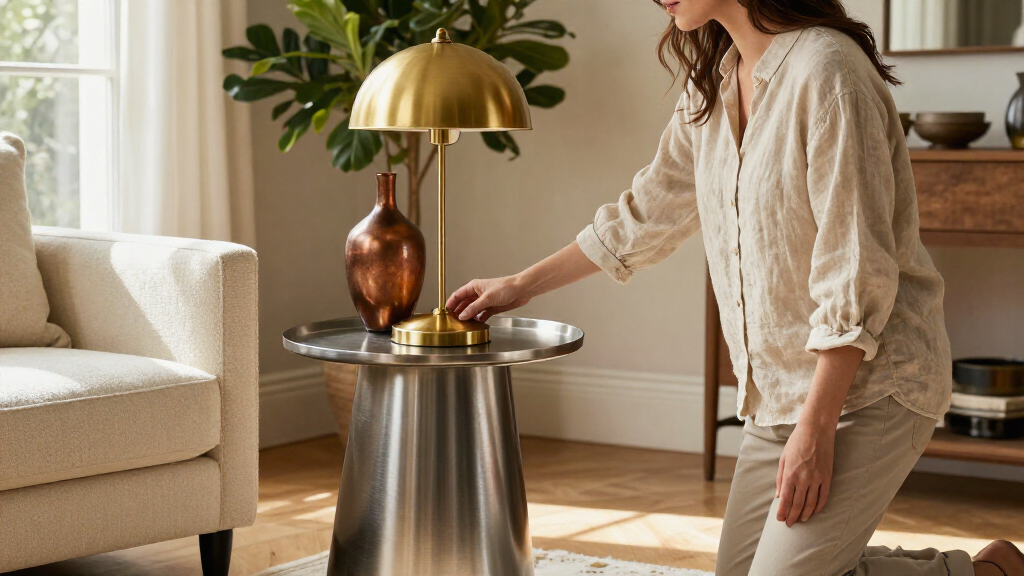
1. Start with metals that work together. Luba Libarikian, founder of Libarikian Interiors, says brass and bronze often pair well because both have warm tones, while black metal can act as a flexible accent. Silver finishes such as polished nickel can also be combined with brass, she says, but the contrast is easier to manage when one finish is dominant.
2. Read metals as part of the whole palette. Marea Clark, founder of Marea Clark Interiors, says she considers metal finishes alongside flooring, paint and fabrics. The finishes need not match, but should make sense within the larger scheme. 3. Vary sheen and patina, Lisa Staton, founder of Lisa Staton Interior Design, advises: a polished surface next to an aged or softly patinated one can add contrast. She says a room does not need equal amounts of each metal; a small accent may be enough.
4. Choose where finishes change. Libarikian points to bar areas, where moody lighting can help different metals and textures feel cohesive, and says kitchens can combine materials when their undertones are similar. Clark says her firm typically keeps plumbing fixtures and cabinet hardware consistent, then brings in another finish through lighting. 5. Use the mix to soften a room. Renée Gaddis, founder of Renée Gaddis Interiors, favors mixed finishes in bathrooms, where she says they can make a space feel less uniform and more personal.
Mix metals with intention Keep the room cohesive
Interior designers say mixed finishes can add contrast and a collected feel when they relate to the room’s palette and are balanced in proportion.
Choose a compatible palette
Treat metals as part of the room’s full mix of flooring, paint and fabrics.
Pair brass and bronze
Their warm tones can work together; black metal can serve as a flexible accent.
Connect to the palette
Finishes need not match, but should make sense alongside other materials.
Control the contrast
Use proportion and surface character to keep variety from feeling scattered.
Let another metal play a smaller accent, especially when pairing silver tones with brass.
A polished surface beside an aged or softly patinated one adds contrast without equal amounts of each metal.
Place finishes deliberately
Choose where consistency helps and where a different finish can add interest.
- Plumbing fixtures
- Cabinet hardware
- Lighting and smaller accents
- Bar areas with moody lighting
Adapt the mix to the room
Designers describe different ways to use mixed metals in kitchens and bathrooms.
| Space | Design guidance |
|---|---|
| Kitchen | Mix materials when their undertones are similar. |
| Bathroom | Contrasting finishes can make the space feel less uniform and more personal. |
How Finish Choices Shape a Room
Metal finishes appear across hardware, lighting and plumbing fixtures, so decisions about them can affect how connected the room feels. A single finish throughout can read as uniform; several finishes can add contrast, but may look scattered if they compete with the room’s other materials. The designers’ advice is not to add variety for its own sake, but to connect each finish to the palette and use repetition or proportion to give the mix structure.
Proportion is one practical control. Keeping one finish dominant lets another serve as an accent, particularly when combining warmer brass with cooler polished nickel. Varying surface sheen offers another source of distinction without requiring every object to introduce a new color. These are design recommendations, not fixed rules: the guidance allows for different choices depending on the room and its materials.
Products Worth Considering

Philips Hue Play Floor Lamp, RGBWWIC LED, 53 Inch, Black

Sonos Era 100 Wireless Smart Speaker, White

Philips Hue Bridge Pro Starter Kit with 4 A19 E26 Color Smart Bulbs
As an affiliate, we earn on qualifying purchases.
Where Designers Mix Finishes
Kitchens and bathrooms are common settings for metal finishes because hardware, plumbing and lighting can all introduce different surfaces. The advice here does not require every element to match, nor does it recommend changing every fixture. Clark’s approach keeps plumbing and cabinetry hardware consistent while using lighting for contrast. Libarikian says kitchen materials can differ when their undertones are similar.
Placement also affects the result. Libarikian highlights bar areas, where moody lighting can bring varied textures together. Gaddis describes bathrooms as a place where contrasting finishes can soften a polished or uniform look. Across these examples, the designers focus on coordinating finishes with the room rather than applying one formula to every space.
“Mixing metals in a room is a good way to add variety and contrast, and a way for a room to feel like it was collected over time.”
— Luba Libarikian, founder of Libarikian Interiors
No Fixed Finish Formula
The advice is qualitative and does not set a required number of metals, a precise ratio or a universal combination that works in every home. Whether a pairing feels cohesive depends on the particular finishes and their relationship to flooring, paint, fabrics and other surfaces. The designers describe approaches they use; they do not present them as rules or as a guarantee of a specific result.
Individual preferences also differ. Clark generally keeps plumbing fixtures and cabinet hardware consistent, while Libarikian says kitchen materials can be mixed when their undertones align. The guidance leaves room for either choice and does not identify one finish as the correct option for all rooms.
Apply the Advice Room by Room
For a room under consideration, begin by viewing finishes together with its flooring, paint and fabrics, as Clark recommends. Then decide which metal will be dominant and where an accent can appear. If introducing a second finish feels too stark, varying the sheen or patina may provide contrast without making every element compete.
There is no scheduled next development attached to this design guidance. Its practical next step is a room-by-room decision: keep selected fixtures consistent where that suits the space, and test other finishes in lighting or smaller accents before extending the mix.
Source: rss
Key Questions
Which metals are easiest to combine?
Libarikian says brass and bronze often work together because both have warm tones. She also describes black as a flexible accent. Other pairings can work, but she advises making one finish dominant when contrasting silver and brass tones.
Do all the metal finishes in a room need to match?
No. Clark says finishes should fit the larger palette rather than match exactly. The designers recommend choosing finishes that relate to the room’s materials and avoiding a mix that feels arbitrary.
How can I mix metals without making the room feel busy?
Choose a dominant finish and use other metals in smaller amounts. Staton also recommends varying sheen or patina, such as pairing a polished surface with an aged one, instead of giving every finish equal weight.
Can kitchen hardware and lighting have different finishes?
Yes, according to Clark’s approach. She says her firm usually keeps plumbing fixtures and cabinetry hardware consistent, then uses a different metal for sconces or pendant lights. Libarikian says kitchen materials can also be mixed when they have similar undertones.
Source: veranda.com